
 简体中文
简体中文 English
 русский
 Español
Home / News / Industry News / How does the carbon content of the base material influence the hysteresis loss in an Automotive Small Motor Stator Core?
How does the carbon content of the base material influence the hysteresis loss in an Automotive Small Motor Stator Core?
Carbon content in the base material of an Automotive Small Motor Stator Core has a direct and measurable negative effect on hysteresis loss. Even small increases in carbon concentration — as little as 0.005 wt% above the target threshold — can raise hysteresis loss by 10–25% by pinning magnetic domain walls and increasing the coercive force (Hc) of the electrical steel. For EV and automotive motor designers, controlling carbon to below 0.005 wt% (50 ppm) in the finished lamination is a critical material specification, not a secondary concern.
Why Carbon Is the Enemy of Low Hysteresis Loss
Hysteresis loss in an Automotive Small Motor Stator Core occurs because energy is consumed each time the magnetic domains within the iron lattice reverse direction under an alternating magnetic field. The area enclosed by the B-H hysteresis loop is directly proportional to this energy loss per cycle. Carbon atoms dissolved in the iron lattice — or precipitated as iron carbide (Fe₃C, cementite) particles — act as pinning sites that impede domain wall motion.
When domain walls encounter carbon precipitates or interstitial carbon atoms, greater magnetic field strength is required to move them. This increases the coercive field Hc and widens the hysteresis loop, directly raising hysteresis loss (Wh), which is governed by the Steinmetz relation:
Wh = kh · f · Bm^n
Where kh is the hysteresis coefficient — a material constant directly influenced by carbon content and microstructural purity — f is frequency, Bm is peak flux density, and n is the Steinmetz exponent (typically 1.6–2.0 for silicon steel). Higher carbon content raises kh, increasing hysteresis loss at every operating point of the Automotive Small Motor Stator Core.
Quantifying the Impact: Carbon Level vs. Hysteresis Loss Data
The relationship between carbon content and hysteresis loss is well-documented in electrical steel research. The following table summarizes typical coercive force and hysteresis loss values for non-oriented silicon steel at varying carbon concentrations, as measured at 50 Hz and 1.5 T — conditions representative of a low-speed Automotive Small Motor Stator Core operating point.
| Carbon Content (wt%) | Coercive Force Hc (A/m) | Hysteresis Loss Wh (W/kg @ 50Hz, 1.5T) | Relative Wh Increase |
|---|---|---|---|
| < 0.003 (30 ppm) | 40–55 | 0.85–1.05 | Baseline |
| 0.005 (50 ppm) | 55–75 | 1.05–1.25 | +15–20% |
| 0.010 (100 ppm) | 80–110 | 1.30–1.65 | +40–55% |
| 0.020 (200 ppm) | 120–160 | 1.80–2.30 | +90–120% |
The data shows a near-linear increase in coercive force with carbon content, but hysteresis loss escalates more steeply above 0.010 wt% as carbide precipitation becomes significant. For an Automotive Small Motor Stator Core running at higher frequencies — for example, a 400 Hz EV auxiliary motor — these losses are multiplied proportionally, making carbon control even more critical.
Carbon Aging: The Hidden Long-Term Degradation Risk
Carbon in electrical steel causes a phenomenon known as magnetic aging. At elevated operating temperatures — typical of an Automotive Small Motor Stator Core running continuously in an under-hood environment at 80–130°C — dissolved carbon atoms diffuse through the iron lattice over time and precipitate as fine Fe₃C (cementite) particles at grain boundaries and dislocation sites.
This precipitation process progressively increases domain wall pinning, raising the coercive force and hysteresis loss over the motor's service life. Studies on conventional low-carbon steel (C: 0.01–0.03 wt%) show that magnetic aging at 100°C over 1,000 hours can increase hysteresis loss by 15–30% compared to the initial as-annealed state. In an Automotive Small Motor Stator Core with a 10-year, 150,000 km design life, this degradation pathway is a serious reliability concern.
Ultra-low carbon steels (C < 0.003 wt%) and fully stabilized grades — where residual carbon is locked by additions of titanium (Ti) or niobium (Nb) as stable carbides — effectively eliminate magnetic aging. This is why premium Automotive Small Motor Stator Core grades specify not just low carbon, but also carbon-stabilizing alloying elements.
How Stamping and Annealing Affect Carbon's Influence
Manufacturing processes for an Automotive Small Motor Stator Core interact directly with carbon content in ways that amplify or mitigate its effects on hysteresis loss.
Stamping-Induced Stress and Carbon Interaction
High-speed progressive stamping introduces residual mechanical stress into the lamination edges — a zone extending 0.2–0.5mm inward from the cut edge. In higher-carbon steels, the pre-existing domain wall pinning from carbon combines with stress-induced pinning, creating a significantly degraded magnetic zone. For small Automotive Small Motor Stator Core laminations with narrow tooth widths (typically 2–5mm), this edge-degradation zone can represent 20–40% of the tooth cross-section, disproportionately increasing local hysteresis loss.
Stress-Relief Annealing as a Corrective Process
Stress-relief annealing at 750–850°C in a protective atmosphere (N₂ or N₂/H₂) after stamping partially recovers magnetic properties by recrystallizing the deformed edge zone and allowing some carbon to redistribute into lower-energy configurations. However, for higher-carbon base materials, annealing cannot fully undo the damage — it can recover approximately 60–75% of the stamping-induced hysteresis loss increase, but the residual carbon pinning effect remains. Ultra-low carbon steels respond more completely to annealing, recovering 85–95% of their pre-stamping magnetic performance.
Silicon Content as a Carbon Counterbalance
In electrical steel for Automotive Small Motor Stator Core applications, silicon (Si) additions of 2%–3.5% play a dual role: they increase electrical resistivity (reducing eddy current loss) and reduce the solubility of carbon in the iron matrix. Higher silicon content drives carbon out of solid solution and into stable precipitate form more readily during processing, which — if the annealing cycle is properly designed — can result in a lower effective concentration of magnetically active free carbon.
This is why high-silicon grades such as 35H270 (3.2% Si, C < 0.004 wt%) achieve substantially lower hysteresis loss than low-silicon grades at equivalent nominal carbon levels. The silicon-carbon interaction must be accounted for when comparing steel grades — carbon alone does not define hysteresis performance without knowing the silicon content and thermal processing history of the Automotive Small Motor Stator Core lamination.
Comparing Standard Electrical Steel Grades by Carbon Specification
| Steel Grade | Si Content (%) | Max Carbon (wt%) | Total Loss @ 50Hz, 1.5T (W/kg) | Aging Resistance |
|---|---|---|---|---|
| 35H300 | 2.8–3.2 | 0.005 | ≤ 3.00 | Good |
| 35H270 | 3.0–3.4 | 0.004 | ≤ 2.70 | Very Good |
| 20H1200 (Hi-B) | 3.0–3.3 | 0.003 | ≤ 1.20 (at 1.7T) | Excellent |
| 50H470 (standard) | 1.5–2.0 | 0.010 | ≤ 4.70 | Moderate |
The 50H470 grade, common in lower-cost motor applications, permits up to 0.010 wt% carbon — twice the threshold of premium grades — and shows total core loss nearly 60% higher than 35H270. For an Automotive Small Motor Stator Core in a high-cycle EV application, this difference accumulates significantly over the motor's operational lifetime.
Practical Recommendations for Minimizing Carbon-Driven Hysteresis Loss
Engineers specifying an Automotive Small Motor Stator Core should treat carbon content as a primary procurement and process control parameter, not a secondary metallurgical detail. Key recommendations include:
- Specify maximum carbon at ≤ 0.005 wt% (50 ppm) in the lamination steel purchase specification for EV-grade motors
- For motors with design life exceeding 8 years or 100,000 hours, require carbon-stabilized grades with Ti or Nb additions to prevent magnetic aging
- After stamping, apply a controlled stress-relief anneal at 750–820°C for 2–4 hours in N₂ atmosphere to partially recover hysteresis performance
- Avoid substituting standard commercial-grade electrical steel (C: 0.008–0.015 wt%) for specified motor grades, even temporarily during supply shortages
- Validate incoming steel coils with coercive force (Hc) measurement — a rapid, non-destructive proxy for carbon-driven hysteresis loss in incoming quality control
- Consider higher silicon content grades (3.0–3.5% Si) to suppress carbon solubility, particularly for Automotive Small Motor Stator Core designs operating above 200 Hz
The influence of carbon on hysteresis loss in an Automotive Small Motor Stator Core is both immediate and cumulative. At the point of manufacture, elevated carbon raises the hysteresis coefficient kh and widens the B-H loop. Over the service life of the motor, carbon migration and carbide precipitation continue to degrade magnetic performance through aging — a process that is essentially irreversible without re-annealing. Specifying ultra-low carbon electrical steel (C ≤ 0.005 wt%), combining it with appropriate silicon content and post-stamp annealing, is the single most effective material-level intervention for minimizing hysteresis loss and ensuring long-term magnetic stability in an Automotive Small Motor Stator Core designed for EV and automotive duty cycles.
Previous article
What exactly does a rotor core do inside a motor or generator?
next article
How do Motor Stator Cores made from silicon steel laminations compare to those made from amorphous alloy in terms of core loss?
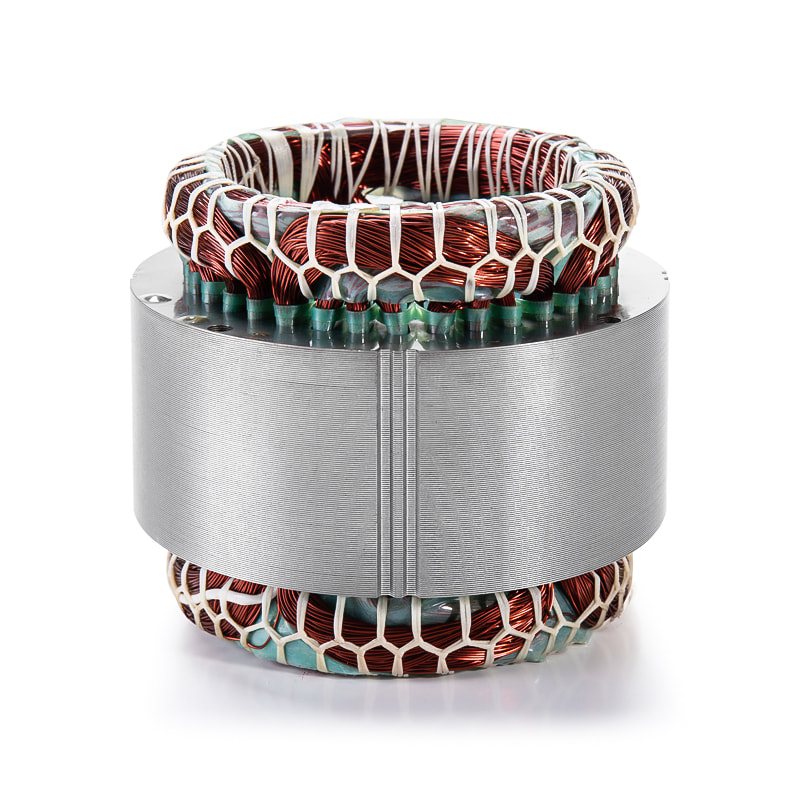
Related News
-
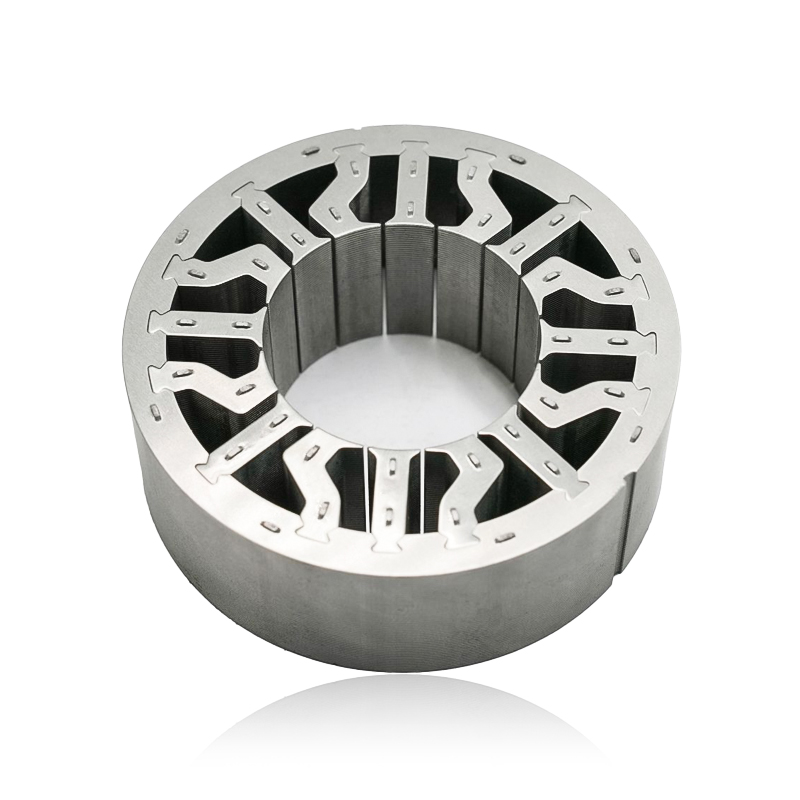
What are Stator and Rotor Cores? Stator Cores A stator core is the stationary component of an electric motor. It's the part that houses the copper windings, which, when an electric current passes thro...
See Details -
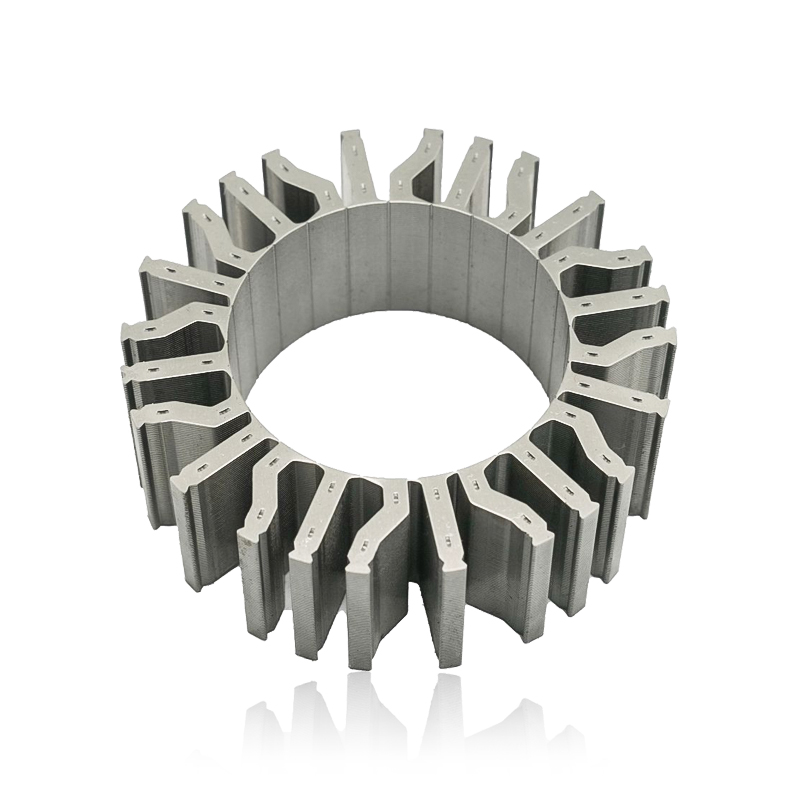
Introduction The modern automobile is a complex machine, and its evolution has been driven by continuous innovation in every component. While internal combustion engines have dominated the industry fo...
See Details -
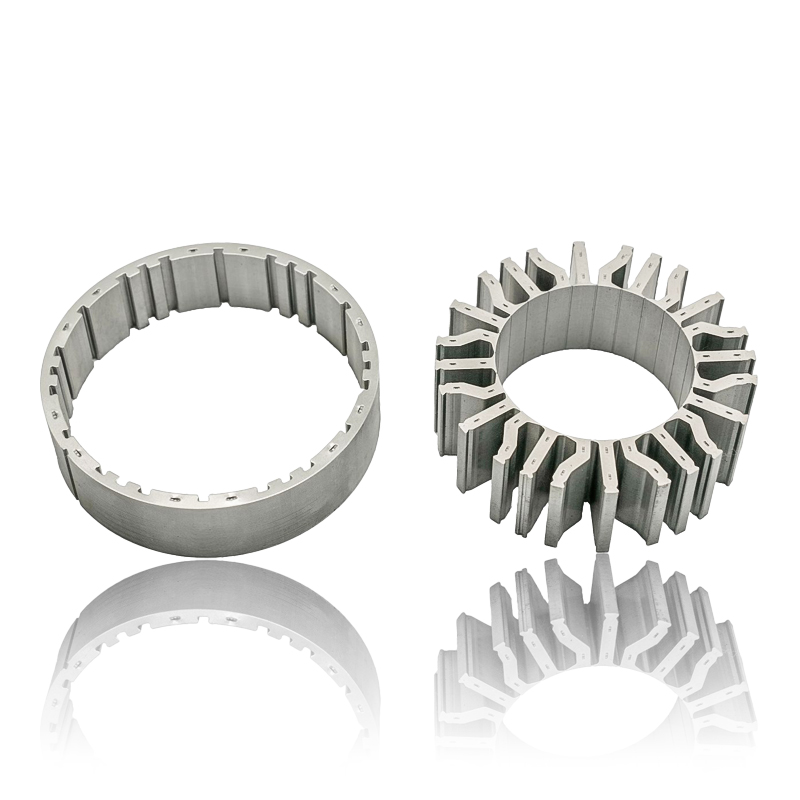
The Importance of Material Selection for Rotor and Stator Cores in Electric Vehicle Motors In the design of electric vehicle (EV) motors, material selection is a pivotal factor influencing the motor’s...
See Details -
Introduction of automotive motor stator and rotor cores The increasing popularity of electric vehicles and hybrid electric vehicles has brought about significant advancements in automotive technology....
See Details


Zhejiang Jufeng Technology Co., Ltd. © All rights reserved
