
 简体中文
简体中文 English
 русский
 Español
Home / Products / Non-Automotive Motor Stator and Rotor Cores / Generator motor stator and rotor core
-
-
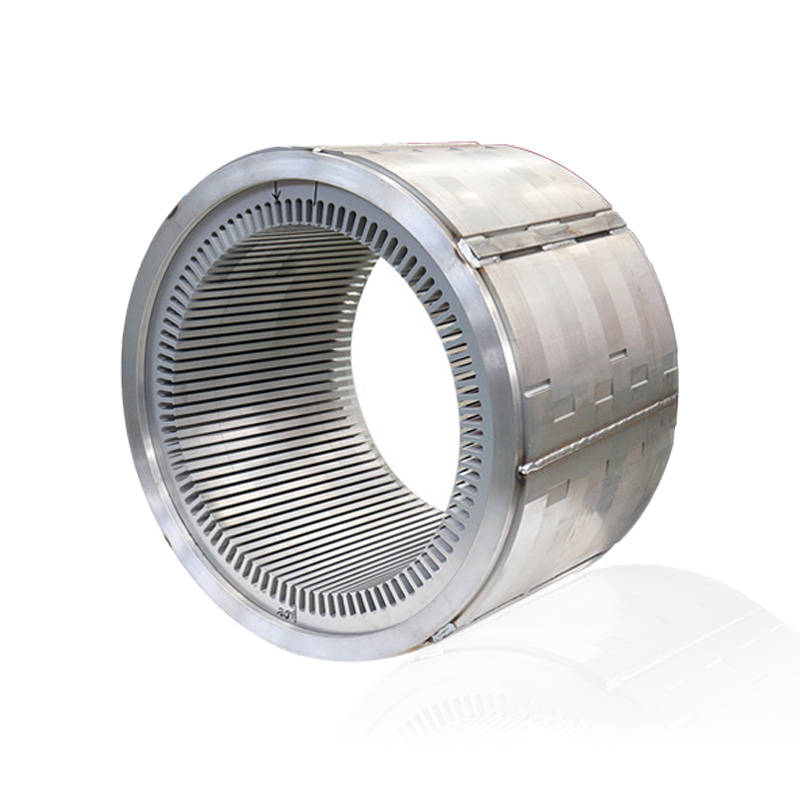
Diesel Generator Stator Core
-
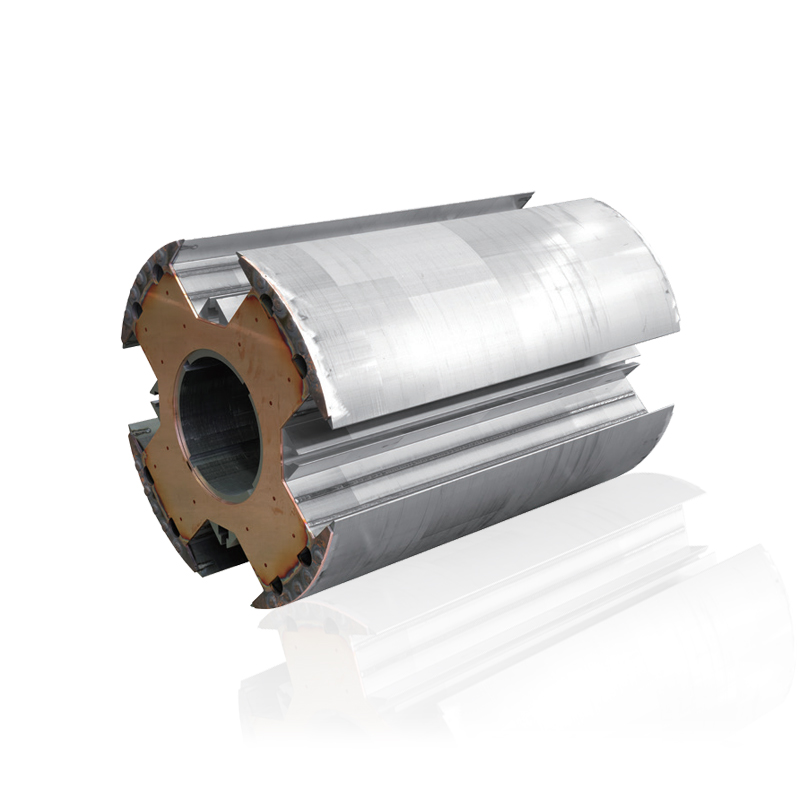
Diesel Generator Rotor Core
-
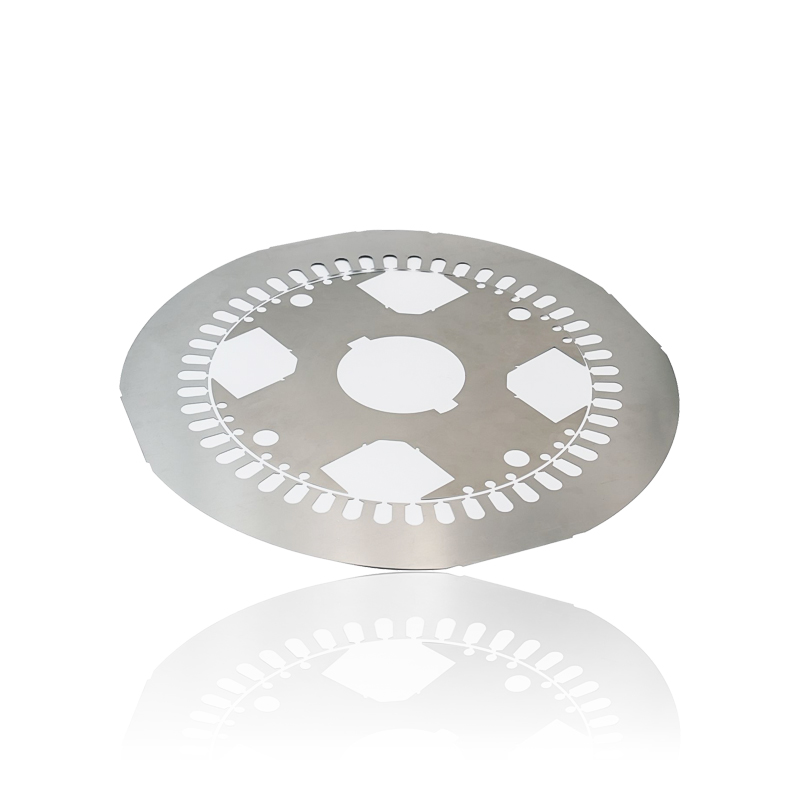
Generator Rotor Core
About Us
Zhejiang Jufeng Technology Co., Ltd.
Zhejiang Jufeng Technology Co., Ltd., since its establishment in 1998, has always adhered to the core values of "love, integrity, creation, and win-win", and is unwaveringly committed to the noble mission of "reputable the industry, innovation-driven, employee welfare, and social contribution".
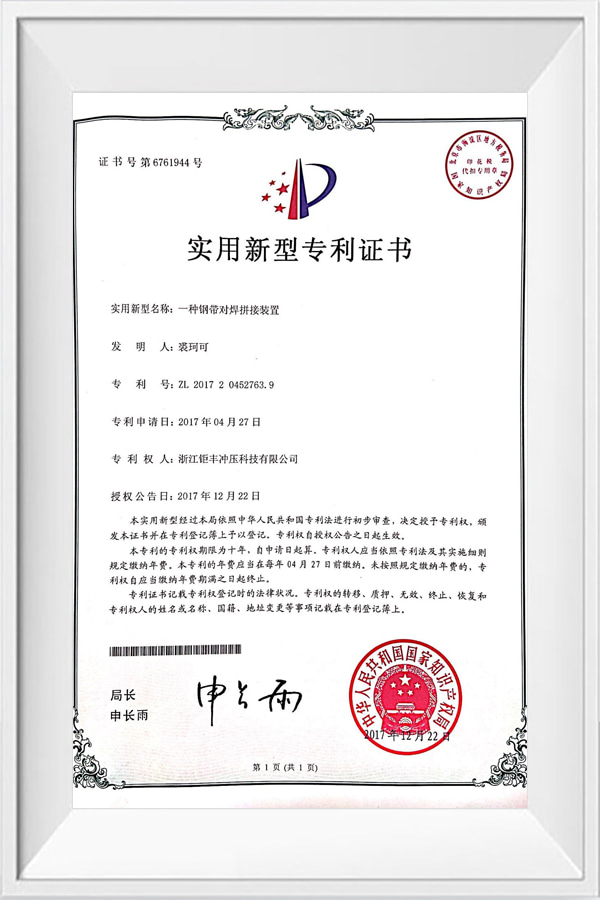
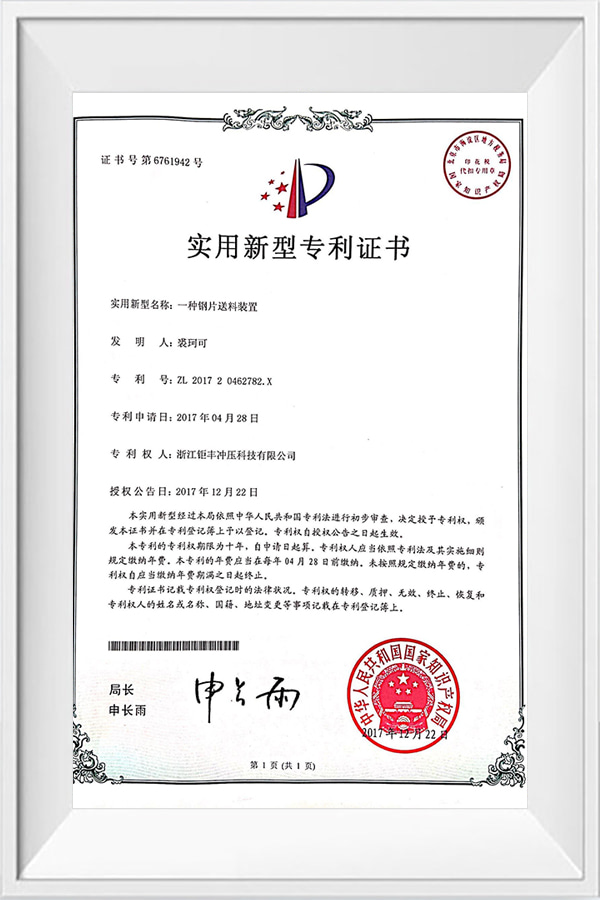
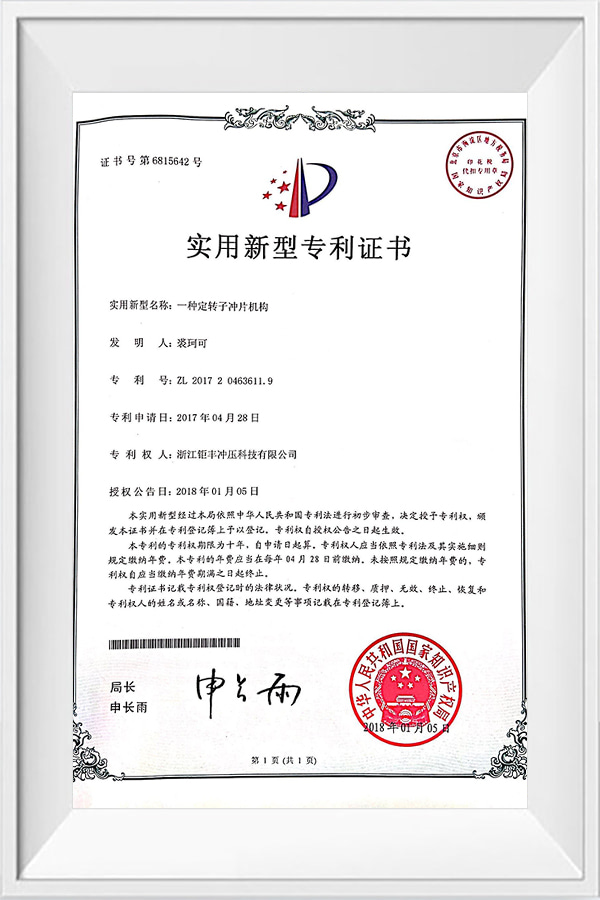
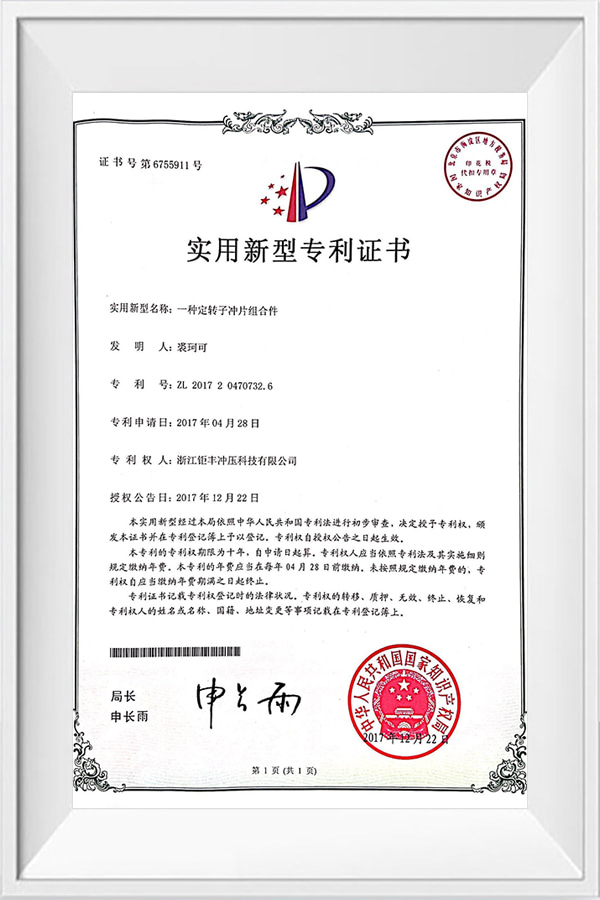
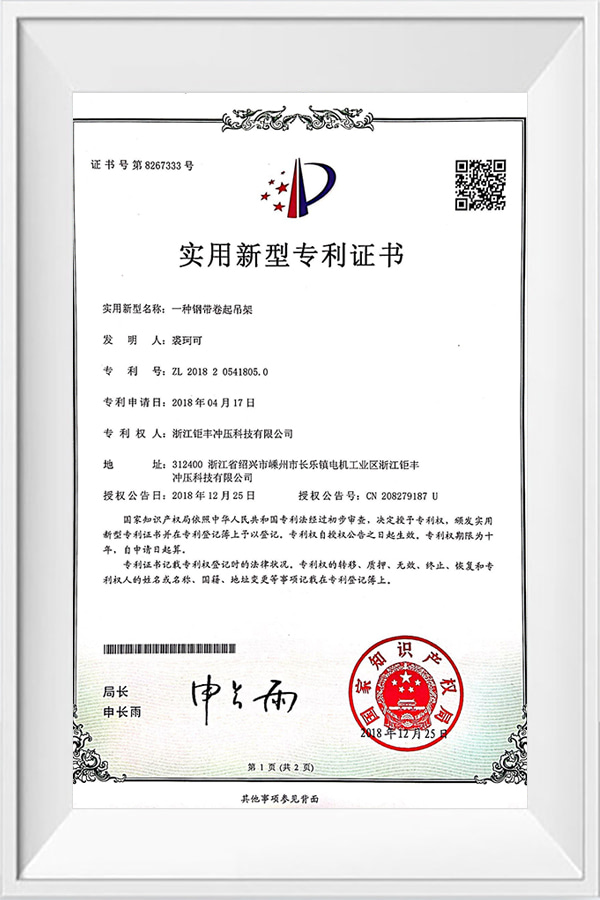
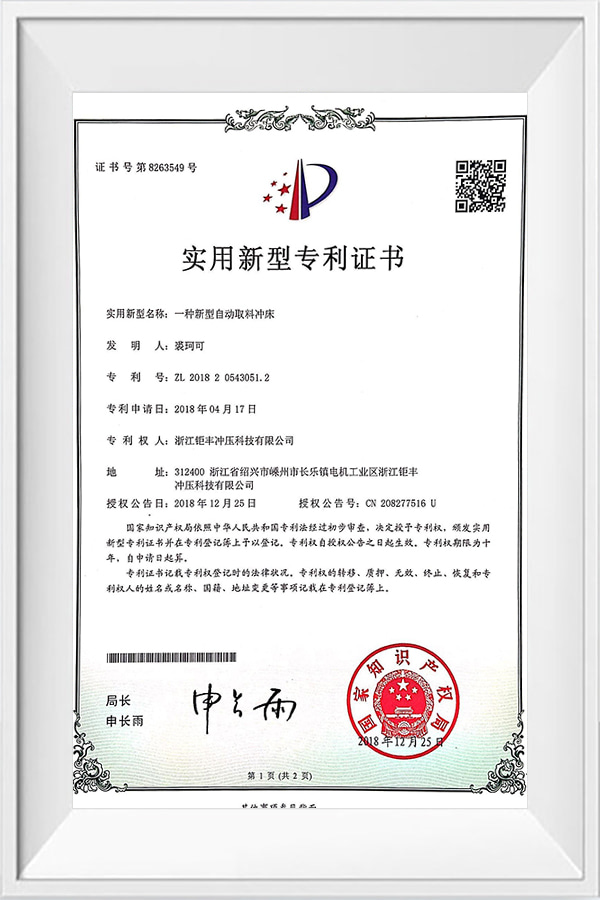
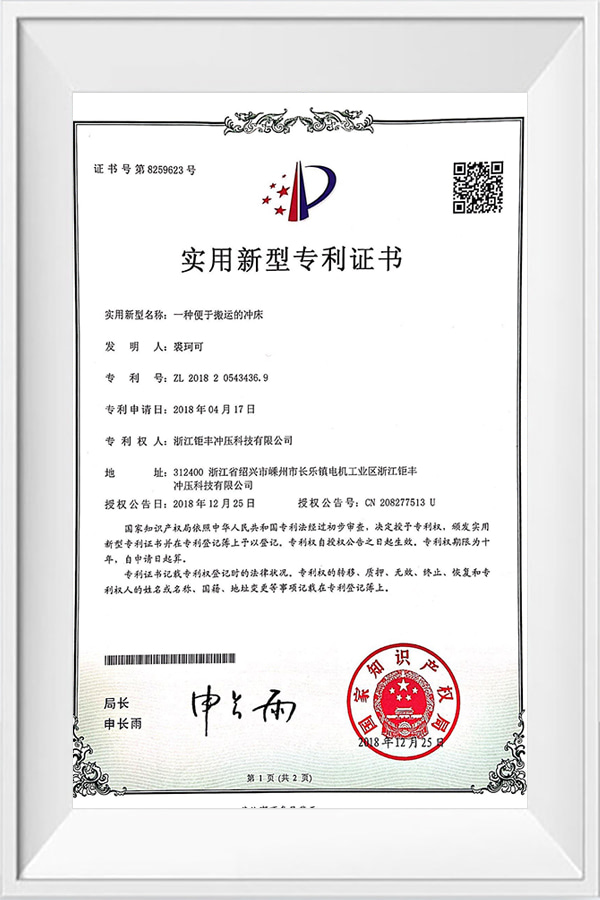
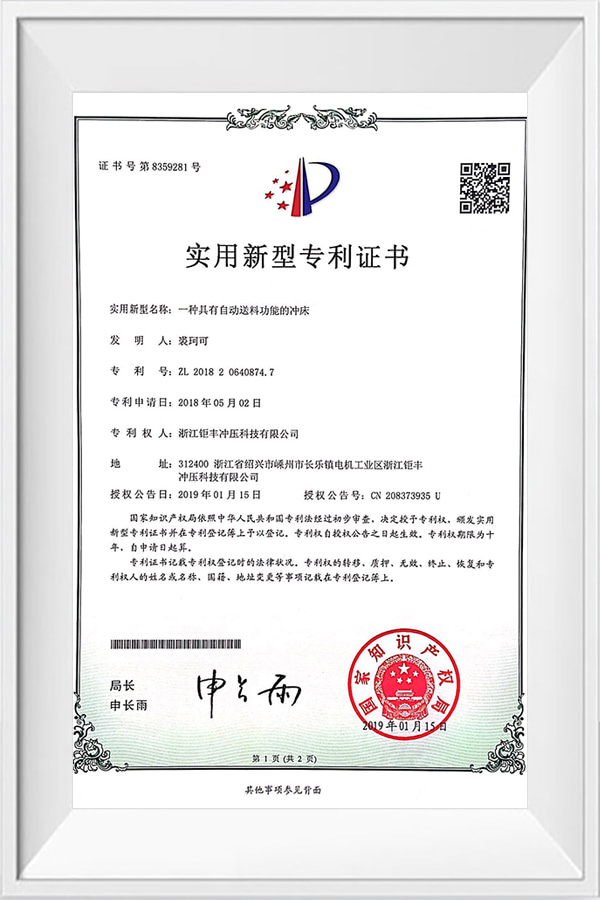
Jufeng, with its profound foundation and relentless innovation in the field of electric motors, has been honored with a series of national and provincial accolades, including "National High-Tech Enterprise," "National Specialized and Innovative Small Giant Enterprise," and "Zhejiang Province Industry Innovation and Excellence Demonstration Unit," becoming a shining pearl in the electric motor industry of Zhejiang Province. As a famous China Generator motor stator and rotor core Manufacturers and OEM/ODM Generator motor stator and rotor core Suppliers, the company specializes in the design, manufacturing, sales, and service of core products such as motor stator and rotor lamination, cores, cast aluminum rotors, and cast copper rotors. Its products are widely used in key areas such as electric vehicle drive motors, ultra-high efficiency industrial motors, household appliances, wind power generation, rail transit, robotics, and industrial transmission. The company has established three major series of core production bases for industrial standard motors, high-efficiency motors, and electric vehicle drive motors, with a total area of 90,000 square meters across all production bases. It employs over 500 professional staff, with steel consumes 150,000 tons a year, and boasts advanced R&D testing equipment and production facilities. Jufeng has established cooperation with numerous top-tier domestic and international enterprises, including BYD, Founder Motor, ABB, CRRC Shidai, CRRC Shangchi, Grundfos, Hua Chuan Electric, ZIEHL-ABEGG, GLB Power, and Inovance, thus joining the ranks of professional stator and rotor manufacturing enterprises with core competitiveness in China.
Jufeng, with its profound foundation and relentless innovation in the field of electric motors, has been honored with a series of national and provincial accolades, including "National High-Tech Enterprise," "National Specialized and Innovative Small Giant Enterprise," and "Zhejiang Province Industry Innovation and Excellence Demonstration Unit," becoming a shining pearl in the electric motor industry of Zhejiang Province. As a famous China Generator motor stator and rotor core Manufacturers and OEM/ODM Generator motor stator and rotor core Suppliers, the company specializes in the design, manufacturing, sales, and service of core products such as motor stator and rotor lamination, cores, cast aluminum rotors, and cast copper rotors. Its products are widely used in key areas such as electric vehicle drive motors, ultra-high efficiency industrial motors, household appliances, wind power generation, rail transit, robotics, and industrial transmission. The company has established three major series of core production bases for industrial standard motors, high-efficiency motors, and electric vehicle drive motors, with a total area of 90,000 square meters across all production bases. It employs over 500 professional staff, with steel consumes 150,000 tons a year, and boasts advanced R&D testing equipment and production facilities. Jufeng has established cooperation with numerous top-tier domestic and international enterprises, including BYD, Founder Motor, ABB, CRRC Shidai, CRRC Shangchi, Grundfos, Hua Chuan Electric, ZIEHL-ABEGG, GLB Power, and Inovance, thus joining the ranks of professional stator and rotor manufacturing enterprises with core competitiveness in China.
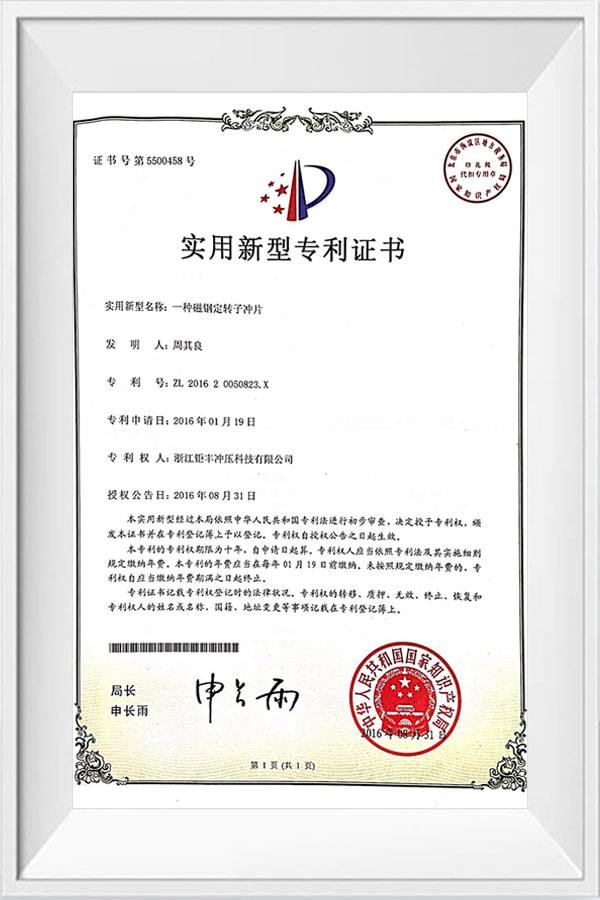
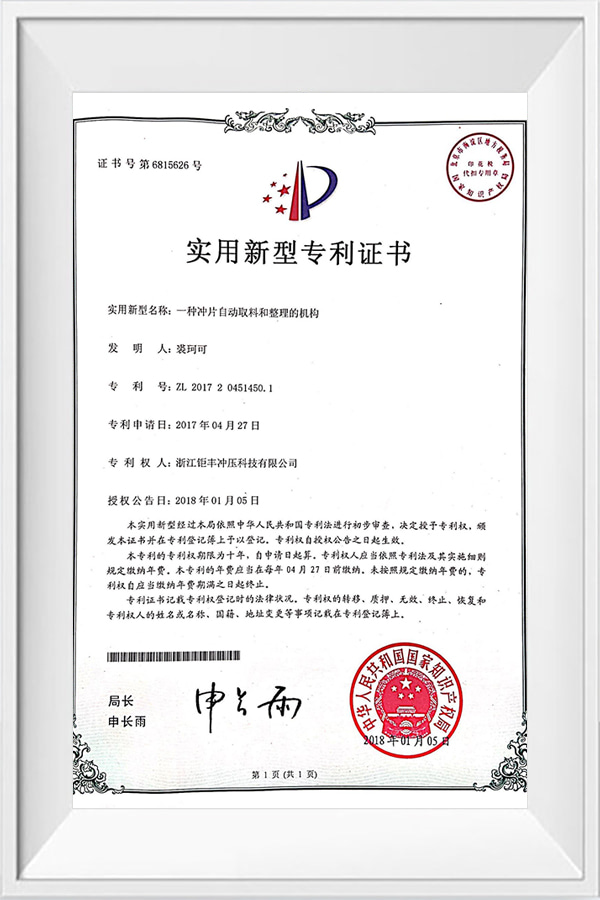
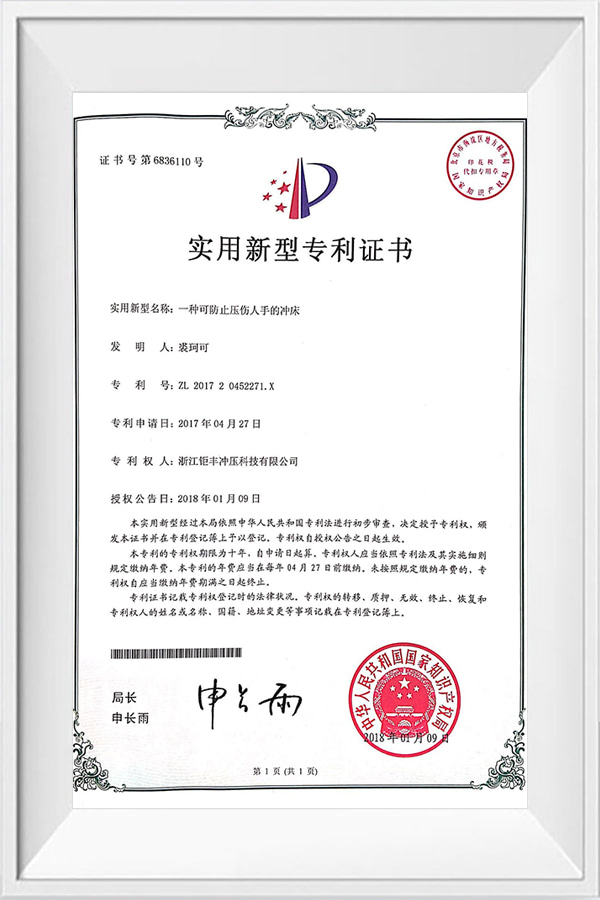
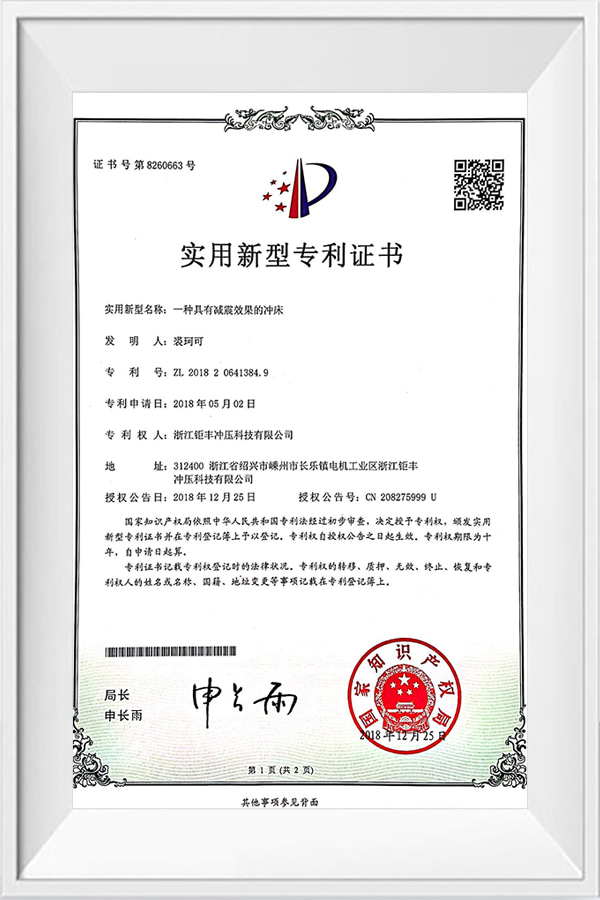
Honor
Message Feedback
News
-
When comparing the thermal management capability of an Electric Vehicle Drive Motor Stator Core with a Water-Cooled Stator Core, the Water-Cooled Stator Core generally delivers superior heat dissipation performance. By circulating coolant directly around the stator assembly, it removes heat more ef...
View More -
After detailed analysis, welded Small Motor Stator Core assemblies provide superior structural rigidity and thermal stability, making them ideal for high-speed or high-torque applications. Bonded cores, in contrast, excel in reducing eddy current losses and vibration, offering better magnetic effic...
View More -
The Motor Stator And Rotor Core generally shows moderate energy loss reduction performance, but it typically underperforms compared to modern laser-engraved laminated core designs in high-efficiency applications. In controlled testing scenarios, laser-engraved lamination structures can reduce core ...
View More
Generator motor stator and rotor core Industry knowledge
Stacking Methods for Generator motor stator and rotor core
The selection and implementation of stacking methods are not merely technical processes but also a precise response to customer application needs. We will provide a professional and detailed overview of several mainstream stacking methods for stator and rotor cores, outlining their characteristics and application advantages.
1. Riveting Stacking
Riveting stacking is a traditional and widely used method for core lamination. The principle involves using rivets to securely fasten multiple laminations together through pre-set rivet holes, forming a complete core.
- Process Features:
- Robust and Durable: The mechanical connection provided by rivets is very strong, capable of withstanding significant torque and centrifugal forces, making it especially suitable for medium-to-low speed, high-torque industrial motors.
- Cost-effective: The riveting process is relatively simple, with lower equipment investment, offering good cost advantages in mass production.
- Application Limitations: Rivets are non-magnetic materials, and the rivet holes occupy part of the stacking space, which can affect the integrity of the magnetic path, leading to uneven magnetic flux and increased localized magnetic reluctance. This limits its use in applications demanding ultra-high efficiency.
Jufeng's Insight: Jufeng Technology possesses extensive experience in riveting stacking. We can precisely control the riveting stress to prevent lamination deformation, ensuring the dimensional accuracy and performance stability of the cores.
2. Welding Stacking
Welding stacking involves using spot welding to join laminations axially, forming a single monolithic core. This method is particularly suitable for applications requiring high mechanical strength and thermal conductivity.
- Process Features:
- High Mechanical Strength: The welded joints securely connect the laminations, giving the core high overall mechanical strength to withstand the immense centrifugal forces generated during high-speed rotation. It is a preferred choice for heavy-duty applications like high-speed motors and wind generators.
- Good Heat Dissipation: Welded joints provide additional heat conduction paths, facilitating the dissipation of heat generated within the core, thereby improving the motor's heat dissipation efficiency and power density.
- Process Challenges: The welding process generates localized high temperatures, which can affect the magnetic properties of the silicon steel, increasing core losses. At the same time, the precision of the weld location must be extremely high to prevent a negative impact on the core's magnetic path.
Jufeng's Insight: Leveraging our deep technical expertise in motor cores, Jufeng Technology has mastered advanced welding techniques to effectively control the heat-affected zone, minimizing damage to the magnetic properties of the silicon steel. This enables us to provide high-performance, high-reliability welded core products to our customers.
3. Adhesive Stacking/Bonding Stacking
Adhesive stacking uses a special high-temperature insulating adhesive to bond each lamination together, forming a core. This advanced method has been developed in recent years to meet the demands of high-efficiency and high-frequency motors. Jufeng Technology's continuous R&D investment in cutting-edge technologies like "in-mold and out-of-mold adhesives" exemplifies our leadership in this field.
- Process Features:
- High Efficiency: The adhesive layer provides excellent insulation, effectively isolating adjacent laminations and significantly reducing eddy current losses, which in turn boosts motor efficiency. This is a key technology for achieving IE4, IE5, and even higher efficiency class motors.
- Optimized Magnetic Path: Adhesive stacking avoids the magnetic path interference caused by rivets or weld spots. This results in a more uniform and complete magnetic flux path, effectively reducing magnetic reluctance and enhancing motor performance.
- Manufacturing Flexibility: The adhesive process allows for more complex core structures, such as segmented stacking and skewed stacking, to optimize motor performance and reduce noise and vibration.
- Cost and Challenges: The adhesive stacking process is complex, requiring high-quality adhesives and precise, uniform application, leading to a relatively higher production cost.
Jufeng's Insight: As the second participating unit in the group standard "Technical Specifications for Motor Lamination and Core" and a participant in the national standard GB/T 21205-2022, Jufeng Technology holds a leading position in adhesive stacking technology. We have successfully developed a series of standardized adhesive-coated laminations and cores, which are widely used in fields like electric vehicle drive motors and ultra-high-efficiency industrial motors.
4. Interlocking Stacking
Interlocking stacking involves designing protrusions and grooves on the laminations, which are then stamped and interlocked directly with adjacent laminations to form a core.
- Process Features:
- No Additional Connectors: This method eliminates the need for rivets, welds, or adhesives, simplifying the manufacturing process and reducing costs.
- Good Magnetic Performance: Since there are no extra non-magnetic materials, the core's magnetic path remains intact, which helps improve motor performance.
- High Precision Requirement: The shape and dimensional accuracy of the protrusions and grooves are critical. Imprecise stamping can lead to loose stacking and affect the core's overall performance.
Jufeng's Insight: Jufeng Technology's continuous investment in improving molds and tooling, along with over 70 patents, ensures the extremely high precision of our interlocking stamping dies. This allows us to manufacture high-quality interlocking stacked cores that meet customers' dual demands for cost and performance.
Stacking Methods Parameter Comparison
| Parameter | Riveting Stacking | Welding Stacking | Adhesive Stacking | Interlocking Stacking |
|---|---|---|---|---|
| Mechanical Strength | High | Very High | Medium | High |
| Magnetic Performance | Medium | Good | Excellent | Good |
| Efficiency Potential | Low-Medium | Medium-High | Very High | Medium-High |
| Cost-effectiveness | High | Medium | Low-Medium | High |
| Heat Dissipation | Medium | Excellent | Medium | Medium |
| Application | General Industrial Motors | High-speed Motors, Generators | EV Motors, High-efficiency Motors | Medium-power Motors |
How to Effectively Control Tolerance in Core Manufacturing
In the manufacturing of high-performance generators and motors, tolerance control of generator motor stator and rotor cores is a core element that determines product quality, performance, and reliability. Strict tolerance control not only ensures smooth motor assembly but also directly impacts the motor's electromagnetic performance, noise, vibration, and overall efficiency.
1. The Importance of Tolerance Control
Core manufacturing tolerances primarily include lamination dimensional tolerance, stack height tolerance, axial dimension tolerance, roundness, concentricity, and slot dimension tolerance. Any deviation in these tolerances can negatively affect motor performance:
- Affects Assembly Precision: Out-of-tolerance stator core outer diameters and rotor core outer diameters can lead to assembly interference or excessive gaps.
- Increases Air Gap Non-uniformity: Causes unbalanced magnetic pull, leading to vibration and noise.
- Reduces Motor Efficiency: Inaccurate slot dimensions can affect winding fill factor and coil arrangement, increasing copper and iron losses.
- Affects Dynamic Balance: Leads to poor rotor dynamic balance, generating vibration at high speeds.
2. Jufeng Technology's Tolerance Control System
Jufeng Technology ensures product excellence through a comprehensive tolerance control system that covers every aspect from raw materials, molds, and production processes to final inspection.
- 2.1. Precision Mold and Tooling Design:
- Super-hard Alloy Molds: We use highly wear-resistant super-hard alloy materials for our molds, combined with advanced precision machining. This ensures the molds maintain extremely high dimensional accuracy and consistency during long-term, high-intensity stamping.
- Modular and Replaceable Design: Ensures production continuity, and allows for regular maintenance and calibration of molds.
- 2.2. Advanced Production Process Control:
- Optimized Stacking Process: We have established strict process parameter standards for different stacking methods, ensuring the core's axial dimension tolerance is within the micron range.
- Precision Machining and Post-processing: For products requiring additional precision, we perform precision CNC turning or grinding post-processing to achieve extremely high roundness, concentricity, and surface roughness.
- 2.3. Automated Inspection and Quality Traceability:
- Coordinate Measuring Machine (CMM): Used to precisely measure key geometric parameters such as the core's outer diameter, inner diameter, and axial dimensions.
- Video Measurement System: Provides quick, non-contact measurement of lamination dimensions and slot dimensions.
- Fully Automatic Online Inspection: Automated inspection equipment is integrated into the production line to perform 100% online inspection of every product.
- Quality Traceability System: Every core has a unique batch number, allowing traceability back to the production date, raw material batch, and other information.
3. The Impact of Tolerance Control on Different Motor Applications
| Parameter | Application Field | General Standard | Jufeng's Capability |
|---|---|---|---|
| Stator Core Outer Diameter Tolerance | Industrial Motors | $\pm$ 0.1 mm | $\pm$ 0.05 mm |
| Rotor Core Outer Diameter Tolerance | High-efficiency Motors | $\pm$ 0.05 mm | $\pm$ 0.02 mm |
| Stack Height Tolerance | EV Drive Motors | $\pm$ 0.1 mm | $\pm$ 0.03 mm |
| Concentricity of Rotor Core (Shaft Hole to Outer Diameter) | High-speed Motors | $\le$ 0.05 mm | $\le$ 0.01 mm |
Insulation Testing of Stator and Rotor Cores
In the manufacturing of generator motor stator and rotor cores, insulation testing is a crucial quality control step that ensures product quality and motor performance. Its core purpose is to verify the insulation performance between core laminations to prevent eddy currents, thereby reducing iron losses and improving motor efficiency.
1. The Importance and Principle of Insulation Testing
- Importance: If there are short circuits or poor insulation between the laminations, an eddy current will be generated, causing the core to heat up and leading to eddy current losses. This not only reduces motor efficiency but can also damage the insulation due to localized overheating, potentially causing motor failure.
- Jufeng's Practice: As a participating unit in the group standard "Technical Specifications for Motor Lamination and Core," we have translated these standards into an executable quality control process, ensuring the comprehensive insulation performance of our cores from raw material to finished product.
2. Common Insulation Testing Methods
- 2.1. Interlaminar Resistance Test:
- Test Principle: A direct method that measures the resistance between two adjacent laminations by applying probes or sensors to the core's surface.
- Jufeng's Practice: We regularly use professional micro-ohmmeters to perform this test, ensuring the integrity of the insulation coating on the silicon steel laminations and checking for uniformity.
- 2.2. Core Loss/Ring Flux Test:
- Test Principle: A non-destructive test that provides a comprehensive assessment of the entire core. It effectively detects internal layer-to-layer short circuits and poor insulation. The core is placed in a special test device with an excitation coil. An alternating current is passed through the coil, creating an alternating magnetic flux in the core. By measuring the excitation current and the core's heating, the presence of a short circuit can be determined.
- Jufeng's Practice: Jufeng Technology has advanced ring flux testing equipment that can simulate the magnetic environment of a motor in operation. We conduct sample ring flux tests on every batch of cores to ensure that both eddy current losses and hysteresis losses are within the specified range.
- 2.3. High Voltage Insulation Test:
- Test Principle: Applied to the core and assembled motor with windings, this test involves applying a high voltage between the windings and the core and measuring the leakage current.
- Jufeng's Practice: We ensure that our cores are clean and burr-free during manufacturing, providing a reliable foundation for customers to perform subsequent high-voltage tests.
3. Insulation Testing Standards
Jufeng Technology strictly adheres to relevant domestic and international industry standards. Key reference standards include:
- IEC 60034-1: General standard for rotating electrical machines.
- GB/T 21205-2022 / IEC 60034-23:2019: As a participant in the formulation of this national standard, we have a deep understanding and practical application of the insulation testing requirements for the repair, maintenance, and overhaul of rotating electrical machines.


Zhejiang Jufeng Technology Co., Ltd. © All rights reserved
