
 简体中文
简体中文 English
 русский
 Español
Home / News / Industry News / How does the stack length of a Generator Motor Rotor Core influence output power density compared to increasing the rotor diameter?
How does the stack length of a Generator Motor Rotor Core influence output power density compared to increasing the rotor diameter?
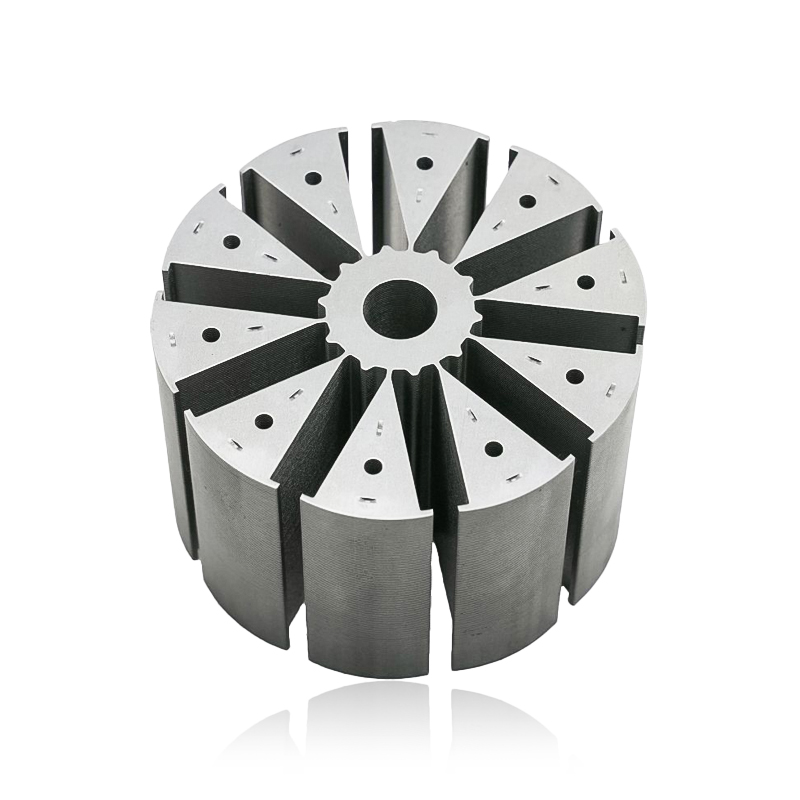
When optimizing a Generator Motor Rotor Core for output power density, the choice between increasing stack length and increasing rotor diameter is not simply a matter of adding material — it is a fundamental design decision with distinct electromagnetic, mechanical, and thermal consequences. The direct answer is: increasing rotor diameter generally yields higher gains in output power density than increasing stack length, because air-gap torque scales with the square of the rotor radius. However, practical constraints often make stack length extension the more cost-effective and feasible option in many industrial applications. Understanding both strategies in depth allows engineers and procurement teams to make better-informed decisions.
Why Rotor Geometry Determines Power Output
The output power of a generator motor is fundamentally tied to the rotor's active volume — the product of the rotor's cross-sectional area and its axial length (stack length). This relationship is captured in the classical output equation:
P ∝ D² × L × n
Where D is the rotor diameter, L is the stack length, and n is the rotational speed. Because diameter appears as a squared term, doubling the rotor diameter theoretically quadruples the torque contribution, whereas doubling the stack length only doubles it. This mathematical relationship is why diameter is the more powerful lever — but it comes with significantly higher engineering complexity and cost.
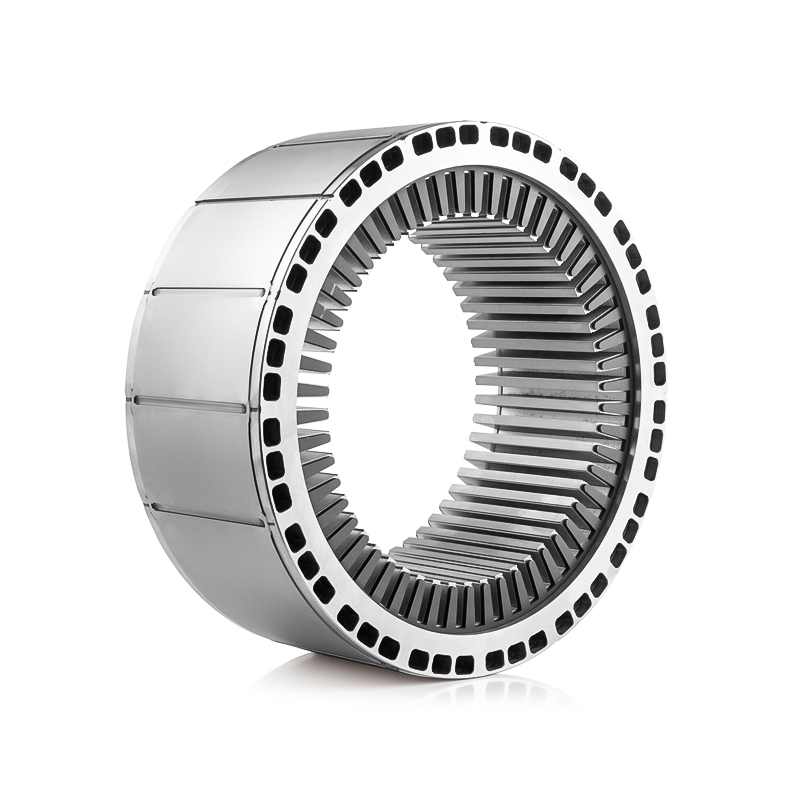
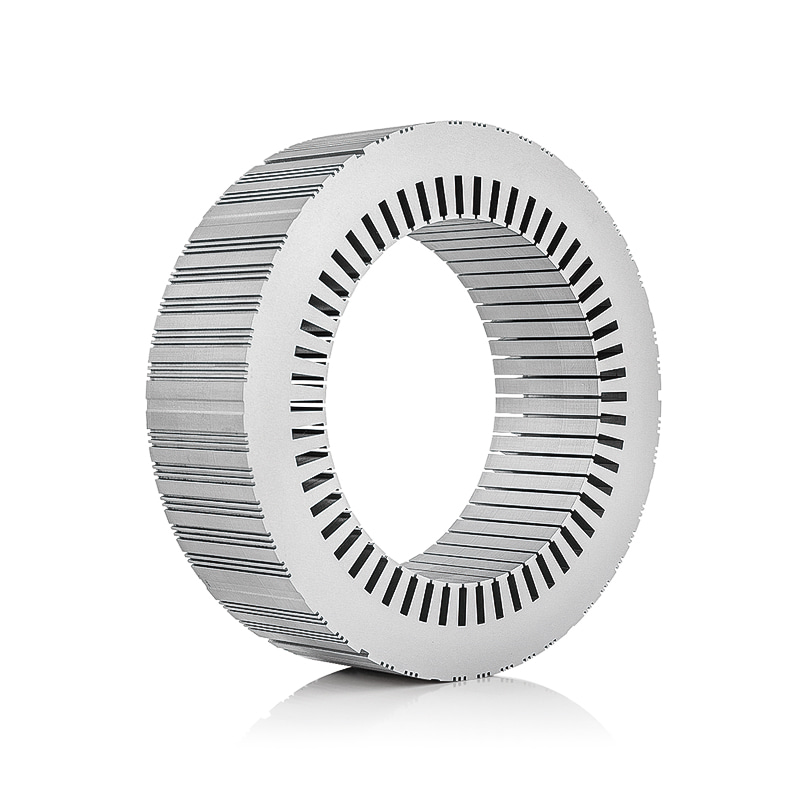
Both the rotor core and associated stator cores must be redesigned in tandem whenever rotor diameter changes, since the air gap geometry, slot dimensions, and yoke thickness all depend on the outer and inner diameters of both components.
Impact of Increasing Stack Length on Power Density
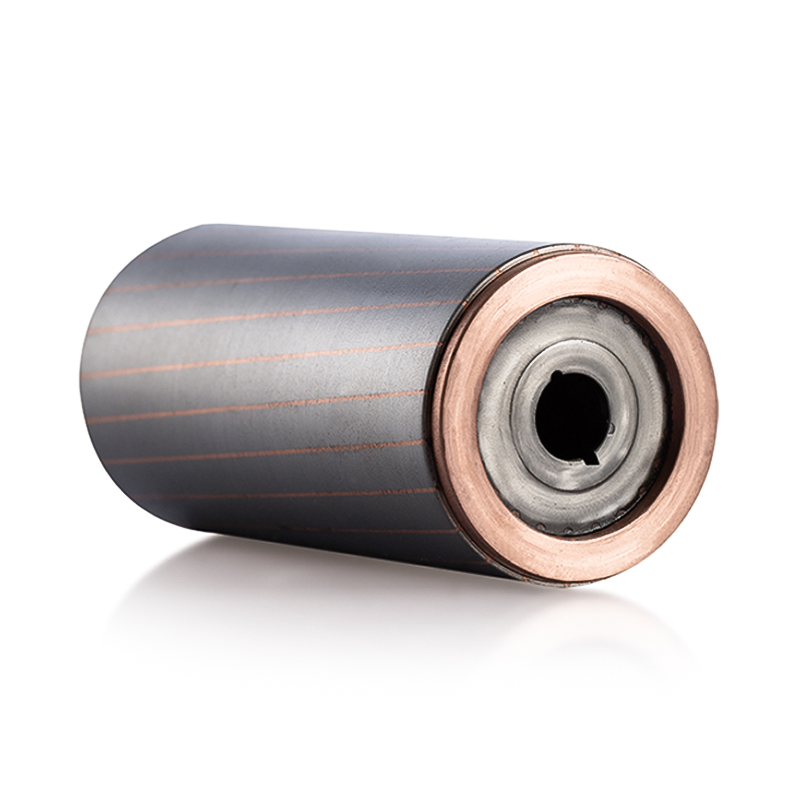
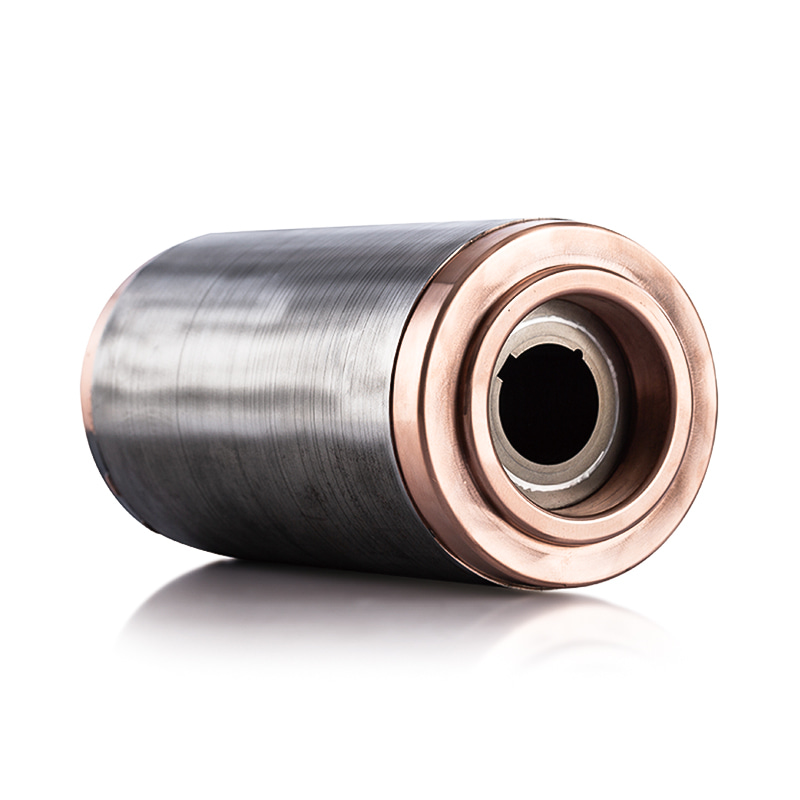
Stack length is the axial dimension of the laminated core pack in a Generator Motor Rotor Core. Extending stack length is often the preferred approach when diameter is constrained by housing dimensions or manufacturing tooling.
Advantages of Longer Stack Length
- No change to stator bore or housing required — lower retrofit cost
- Proportional increase in active copper and iron volume
- Compatible with existing stamping dies for rotor and stator laminations
- Relatively straightforward for manufacturers using standard rotor cores
Limitations of Longer Stack Length
- Increased shaft deflection risk — critical when L/D ratio exceeds 1.5, leading to rotor dynamic instability
- Uneven flux distribution along the axial length, especially beyond 300mm stack depth without cooling ducts
- End-winding length grows proportionally, increasing resistive losses
- Thermal hotspots at the axial center of the rotor core if cooling is insufficient
A practical example: a 4-pole induction motor rotor core with a 200mm diameter and 250mm stack length producing 45 kW can be extended to a 350mm stack to achieve approximately 63 kW — a 40% power increase with minimal tooling changes. However, this requires adding axial ventilation ducts every 50–80mm to manage thermal buildup.
Impact of Increasing Rotor Diameter on Power Density
Increasing the diameter of a Generator Motor Rotor Core is the more powerful design lever for improving power density. The torque produced at the air gap is directly proportional to the square of the rotor radius, making even modest diameter increases highly effective.
Advantages of Larger Rotor Diameter
- Disproportionate gain in torque and power output per unit length
- More slot area available for conductor placement, reducing current density
- Better surface area-to-volume ratio for heat dissipation on the rotor surface
- Lower L/D ratio improves rotor dynamic stability at high speeds
Limitations of Larger Rotor Diameter
- Requires complete redesign of stator cores, including bore, yoke, and slot geometry
- Higher centrifugal stress on rotor laminations and windings at elevated RPM
- New stamping tooling required — significant capital investment
- Overall machine frame size increases, affecting installation footprint
For example, increasing rotor diameter from 200mm to 240mm (a 20% increase) while keeping stack length constant at 250mm results in approximately a 44% increase in theoretical torque output (since 1.2² = 1.44). This demonstrates the squared relationship and explains why large-diameter, short-stack rotor designs dominate in high-torque, low-speed applications such as wind generator motors.
Direct Comparison: Stack Length vs. Rotor Diameter
| Design Parameter | Increasing Stack Length | Increasing Rotor Diameter |
|---|---|---|
| Power scaling | Linear (P ∝ L) | Quadratic (P ∝ D²) |
| Tooling / retooling cost | Low | High |
| Stator core redesign needed | No (same bore) | Yes (full redesign) |
| Rotor dynamic stability | Decreases (high L/D) | Improves (low L/D) |
| Thermal management complexity | Higher (axial hotspots) | Moderate |
| Best application fit | Space-constrained radial envelope | High-torque, low-speed systems |
| Centrifugal stress on laminations | Low change | Increases significantly |
Thermal and Electromagnetic Interactions to Consider
Neither strategy operates in isolation. Both the Generator Motor Rotor Core and the surrounding stator cores experience changes in flux density, current loading, and heat generation whenever either dimension is modified.
When stack length is extended beyond approximately 300mm without ventilation ducts, axial flux uniformity deteriorates. Cores using 0.5mm silicon steel laminations (e.g., M36 grade) show measurably higher core losses per kilogram than 0.35mm laminations (e.g., M19 grade) at frequencies above 100 Hz — a critical consideration in VFD-driven systems where switching frequencies affect both rotor and stator cores equally.
When rotor diameter increases, the air gap flux density must be recalculated to prevent saturation in the stator yoke. For example, increasing rotor diameter by 15% in a fixed-frame machine can raise yoke flux density by 8–12%, potentially pushing M19-grade stator cores into the nonlinear saturation region above 1.7 Tesla, which increases iron losses and reduces efficiency.
Practical Recommendations for Engineers and Buyers
The right approach depends on the specific operating requirements and constraints of the application. The following guidance applies to most industrial and commercial generator motor use cases:
- Choose stack length extension when replacing or upgrading an existing machine with a fixed housing, where rotor and stator cores share standardized bore dimensions.
- Choose larger rotor diameter in new-build projects where maximum power density per unit axial length is the primary objective, especially in direct-drive or low-speed generator applications.
- Maintain an L/D ratio between 0.8 and 1.5 for most general-purpose rotor cores to balance electromagnetic performance with mechanical stability.
- When extending stack length beyond 300mm, incorporate radial ventilation ducts every 60–80mm to prevent thermal derating.
- Always verify that stator cores are rated for the new flux density levels when rotor diameter is increased, to avoid premature magnetic saturation and efficiency losses.
Increasing rotor diameter delivers superior power density gains for a Generator Motor Rotor Core due to the quadratic scaling of torque with radius. However, it demands complete redesign of both rotor and stator cores, new tooling, and careful management of centrifugal stresses. Increasing stack length offers a more accessible, lower-cost path to moderate power improvements — particularly in retrofit scenarios — but introduces thermal and mechanical challenges at high L/D ratios. The optimal solution is application-specific, and in many cases, a combined adjustment of both dimensions, guided by electromagnetic simulation, delivers the best balance of cost, performance, and reliability.
Previous article
What is the difference in dynamic balancing requirements between a high-speed and a low-speed Water Pump Motor Rotor Core?
next article
What is the difference in core loss between a silicon steel Motor Stator Core and an amorphous alloy Motor Stator Core at high frequencies?
Related News
-
What are Stator and Rotor Cores? Stator Cores A stator core is the stationary component of an electric motor. It's the part that houses the copper windings, which, when an electric current passes thro...
See Details -
Introduction The modern automobile is a complex machine, and its evolution has been driven by continuous innovation in every component. While internal combustion engines have dominated the industry fo...
See Details -
The Importance of Material Selection for Rotor and Stator Cores in Electric Vehicle Motors In the design of electric vehicle (EV) motors, material selection is a pivotal factor influencing the motor’s...
See Details -
Introduction of automotive motor stator and rotor cores The increasing popularity of electric vehicles and hybrid electric vehicles has brought about significant advancements in automotive technology....
See Details


Zhejiang Jufeng Technology Co., Ltd. © All rights reserved
