
 简体中文
 English
 русский
 Español

Home / News / Industry News / Steel Progressive Stamping: A Practical Buyer's Guide to Motor Core Cost and Quality
Steel Progressive Stamping: A Practical Buyer's Guide to Motor Core Cost and Quality
Steel Progressive Stamping: Where Cost, Quality, and Supplier Fit Meet
A progressive die is rarely the cheapest first quote. It becomes the lower-cost route when steel strip, die stations, burr limits, stacking control, and maintenance are planned as one production system.
A purchasing team approves a steel progressive stamping quote because the piece price looks lower than single-operation stamping. Six months later, die repairs, slot-edge burrs, and a stack-height deviation turn that saving into a margin conversation. The lesson is not that progressive stamping is risky. It is that the economics live in the strip layout and process discipline, not in press tonnage alone.
The practical answer: volume and repeatability justify the die
For motor stator and rotor cores, steel progressive stamping earns its place when three conditions line up: a stable design, an annual volume high enough to absorb tooling and launch cost, and a tolerance stack that rewards repeatability. One die can combine notching, piloting, interlocking, and final trimming on a single steel strip, so labor per part falls and station-to-station variation is controlled by the tool rather than by operator handling.
That does not make it right for every program. A low-volume industrial motor with frequent design changes may be better served by single-operation tooling or transfer stamping. A high-volume EV traction core with a narrow lamination window and a long program life is a different case. Compare total cost: material utilization, die maintenance, scrap, first-pass yield, and the cost of a design change after tooling release.
Inside a steel progressive stamping line
The steel strip uncoils into a straightener and feeder. A pilot engages a registration hole before each working station, then the strip advances by a fixed pitch. Notching, slot forming, outer-profile trimming, interlocking dimples, and separation happen in sequence. The press does not finish the part in one hit; it carries a connected strip through a chain of controlled operations. For a useful process breakdown, see how stator core laminations are manufactured.
- Coil handling and strip straightening
- Pilot registration and pitch feed
- Notching, slot and profile forming
- Interlocking, welding, or bonding for stack control
- Final trim, burr inspection, and dimensional release
Info: A strip layout that raises material utilization by a few percentage points can outweigh a small press-hour saving over a multi-year program.
Material choices that decide magnetic and stamping performance
Electrical steel is not a commodity line item. Thickness, silicon content, coating, surface condition, and yield strength affect both core loss and die wear. Thin laminations reduce eddy-current loss but increase handling risk and can narrow the punching window. Heavier gauge may lower material cost per sheet, yet it can force a different stack strategy.
| Material route | Magnetic role | Stamping consideration | Common core fit |
|---|---|---|---|
| Thin silicon steel, 0.20–0.27 mm | Low core loss at high speed or frequency | Tight flatness; sensitive to burr and coating damage | EV drive, high-efficiency servo |
| Standard silicon steel, 0.35–0.50 mm | Cost and performance balance | Wider process window; watch die wear and stack height | Home appliance, industrial drive, pumps |
| Low-carbon steel | Lower-cost magnetic path | Easier forming, but higher loss | Cost-sensitive small motors |
| Coated electrical steel | Insulation between laminations | Coating can wear punches; verify adhesion | Stator cores needing interlaminar resistance |
Specify grade, thickness tolerance, coating type, and insulation requirement together. A coating chosen for winding insulation can change punchability; a coating chosen for corrosion resistance can change stack factor. Stacking factor often sits near 0.95 to 0.98 depending on coating and interlocking, and a one-point shift can alter the effective magnetic length of the core.
Tolerance, burr, and stack control: what to audit before approving a die
Approving a steel progressive stamping die from a part print alone is a common procurement mistake. The print defines nominal geometry; the qualification plan should define how the process will hold that geometry at production speed. On motor laminations, burr direction deserves as much attention as burr height, because a burr pointing into the winding path can damage insulation even when the measured height looks acceptable.
The die is not a one-time purchase; it is a production asset whose strip layout, maintenance plan, and burr strategy drive the real unit cost.
- Strip layout and rolling direction relative to the magnetic flux path
- Punch-to-die clearance and insert material by station
- Burr height and direction on slot edges and outer profile
- Camber, flatness, and twist after stacking
- Interlock tightness, weld or bond spacing, and stack height
- First article layout, Cp/Cpk on ID, OD and slots, plus an SPC plan
Warning: Do not release a progressive die without burr direction, flatness, stack height, and coating integrity in the qualification plan. A simple 2D dimensional report will not expose the failure mode that stops a winding line.
If your team is comparing routes, walk through your drawings with the team at Jufeng Technology’s contact page before tooling release. A short review of strip width, burr direction, and stack method often prevents an expensive die revision later.
Progressive, transfer, or single operation: how the routes differ
The route decision should follow program maturity rather than habit. Progressive stamping suits stable, high-volume parts with complex geometry and tight repeatability. Transfer stamping can handle larger parts and more flexible sequences but usually gives up some speed. Single-operation stamping keeps tooling simple and flexible, yet it adds handling and labor per part.
- Progressive: one strip, multiple stations, high volume, strong repeatability, higher tooling investment.
- Transfer: separate blanks moved between presses, moderate volume, more flexibility for larger parts.
- Single operation: low volume, simple geometry, lower tooling cost, more labor and variation risk.
If design maturity is low or annual volume is uncertain, a progressive die can become a locked-in cost. If the part is stable and the supplier has a disciplined die-maintenance plan, the progressive route usually produces the most predictable piece price.
Electric vehicle drive and automotive motor cores
EV traction motors put steel progressive stamping under a tighter spotlight: thinner electrical steel, higher slot fill, and thermal cycling that punishes loose stacks. The die must hold slot geometry and burr direction while the lamination stack maintains flatness and interlaminar insulation. Automotive auxiliary motors follow similar logic at smaller scale, where cost pressure is higher and package space is tighter.
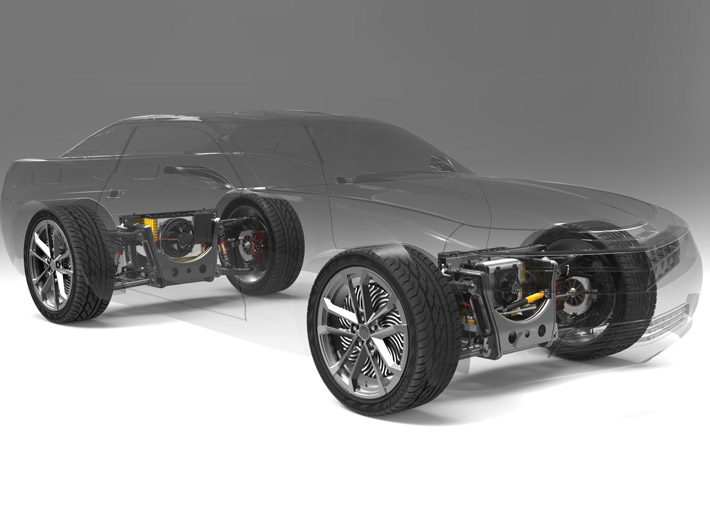 EV Drive Motor Stator and Rotor CoreReview this OEM/ODM stator and rotor core for EV traction applications where thin electrical steel, air-gap precision, and thermal control shape the stamping plan.View Product →
Jufeng Technology’s EV drive motor core category is a practical reference point for programs balancing thin-gauge steel, stack control, and high-volume repeatability.
Home appliance and industrial drive cores
Home appliance motors usually trade extreme efficiency for cost and consistency at very large volumes. A 0.35–0.50 mm electrical steel, a robust strip layout, and a die-maintenance plan that protects uptime often matter more than a marginal core-loss gain. Industrial drives and fans sit between appliance and EV demands: stable torque and reasonable efficiency, but often with wider product mixes and lower annual volumes per variant.
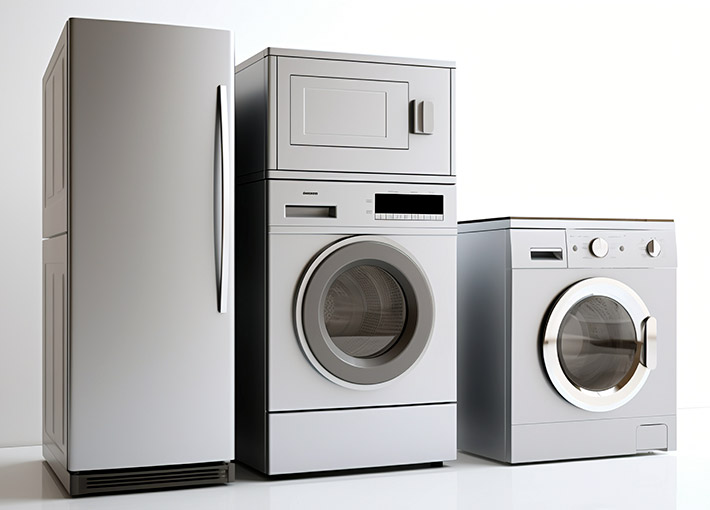 Home Appliance Motor Stator and Rotor CoresCategory covering laminated stator and rotor cores for washing machines, refrigerators, and fans, where cost, material use, and high-volume stamping discipline guide selection.View Product →
Jufeng Technology’s home appliance motor core family reflects this volume-and-mix balance, where stamping discipline and material utilization drive the sourcing conversation.
Wind power and generator cores
Wind power and general generator cores push progressive stamping toward larger diameters, heavier gauges, and stack-length control. At larger diameters, flatness and concentricity become more sensitive to strip camber and die wear; at longer stack lengths, interlocking or welding strategy can change stack factor and handling risk. The process is still progressive stamping, but the audit plan shifts toward dimensional stability over long runs.
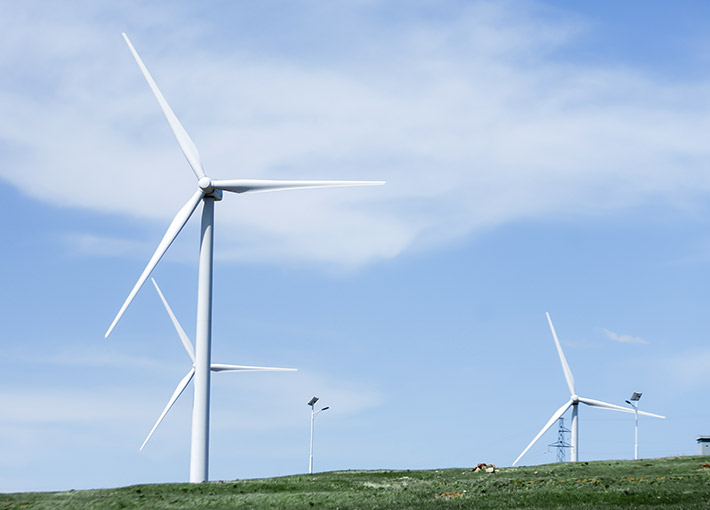 Wind Power Generator Motor Stator and Rotor CoresCategory for laminated generator stator and rotor cores used in wind turbines, relevant where large-diameter flatness, long-stack control, and low iron loss are reviewed together.View Product →
Jufeng Technology’s wind power generator motor core category is relevant where large-diameter laminations and long stack control need to be reviewed together.
A sourcing checklist for steel progressive stamping
Before you send an RFQ, put the process assumptions in one package. Suppliers quote very different die concepts when the strip width, burr direction, stack method, or inspection standard is left open. A clear package shortens the technical review and makes piece-price comparisons meaningful.
- Annual volume, program life, and expected variant count
- Lamination grade, thickness tolerance, coating, and stack-factor target
- Strip width target and material-utilization expectation
- Burr direction and allowable burr height on functional edges
- Stack method: interlock, weld, bond, or rivet
- First article, Cp/Cpk, SPC, coating test, and dimensional report
- Die ownership, maintenance responsibility, and change-cost rules
Success: The strongest RFQ packages define annual volume, strip width, material grade, coating, burr direction, stack height, and inspection method in one document. That clarity usually removes more cost than a last-minute price negotiation.
The bottom line
Steel progressive stamping is a volume process with a precision process hiding inside it. The press is visible; the strip layout, die maintenance plan, burr strategy, and stacking control are what actually determine cost and quality. Buyers who compare total cost and qualify the process—not just the part print—get the repeatability that makes progressive stamping worthwhile.
Previous article
Laminated Iron Core Silicon Steel Motor Core: Design, Supply and Sourcing Guide
next article
Types of Motor Core Lamination: Steel, Thickness, Stacking and Coating
Related News
-
What are Stator and Rotor Cores? Stator Cores A stator core is the stationary component of an electric motor. It's the part that houses the copper windings, which, when an electric current passes thro...
See Details -
Introduction The modern automobile is a complex machine, and its evolution has been driven by continuous innovation in every component. While internal combustion engines have dominated the industry fo...
See Details -
The Importance of Material Selection for Rotor and Stator Cores in Electric Vehicle Motors In the design of electric vehicle (EV) motors, material selection is a pivotal factor influencing the motor’s...
See Details -
Introduction of automotive motor stator and rotor cores The increasing popularity of electric vehicles and hybrid electric vehicles has brought about significant advancements in automotive technology....
See Details


Zhejiang Jufeng Technology Co., Ltd. © All rights reserved
