 简体中文
简体中文 English
 русский
 Español
Electromagnetic Design — Core Physics
A precise look at the invisible currents lamination was engineered to contain — and why a fraction of a millimetre of steel makes the difference between a cool, efficient machine and a wasteful one.
The Direct Answer: Lamination Suppresses Eddy Currents Induced by Changing Magnetic Flux
The physical phenomenon that lamination directly suppresses is the formation of eddy currents — circulating electrical currents induced within the conductive iron of the rotor core whenever it is exposed to a changing magnetic field. These currents are a direct consequence of Faraday's law of electromagnetic induction: any time-varying magnetic flux passing through a conductive material induces a voltage, and that voltage drives current to flow in closed loops within the material itself. In a solid, unlaminated core, these loops can be large and largely unimpeded, resulting in substantial circulating currents that dissipate energy as heat through simple I²R resistive loss.
Lamination does not eliminate the changing magnetic field — that field is fundamental to how the machine converts electrical energy to mechanical energy or vice versa. Instead, lamination interrupts the physical pathways available to eddy currents by dividing the core into thin, electrically insulated sheets. This forces what would have been one large current loop into many much smaller loops, each confined to an individual sheet and separated from its neighbors by a thin insulating coating. Because the resistance encountered by these currents increases and the loop area available to them shrinks dramatically, the resulting losses drop by an order of magnitude or more compared to a solid core of the same dimensions.
Understanding Eddy Currents at the Physical Level
To fully appreciate why lamination is necessary, it helps to walk through the mechanism step by step. Inside any rotating electrical machine — whether it is a motor rotor, a generator stator core, or an alternator stator core — the magnetic flux linking the iron structure is constantly changing, either because the rotor is spinning relative to the stator field or because the applied current itself is alternating. This changing flux, by Faraday's law, induces an electromotive force within any conductive material it passes through.
Iron and steel are excellent conductors of both magnetic flux and electricity — a combination that makes induced current inevitable unless the material is deliberately interrupted.
In a solid block of steel, there is nothing to stop induced current from circulating in large loops perpendicular to the direction of the magnetic flux, tracing paths that can span centimeters rather than fractions of a millimeter.
Why Loop Size Matters So Much
The power dissipated by an eddy current loop is proportional to the square of the induced voltage divided by the resistance of the path, and the induced voltage itself is proportional to the area enclosed by the loop. This means that doubling the size of an eddy current loop can quadruple the power it dissipates. A solid core, with no internal barriers, allows current loops to grow as large as the physical dimensions of the core itself — which is precisely why solid cores generate so much waste heat under alternating magnetic conditions.
How Thin Insulated Sheets Break the Current Path
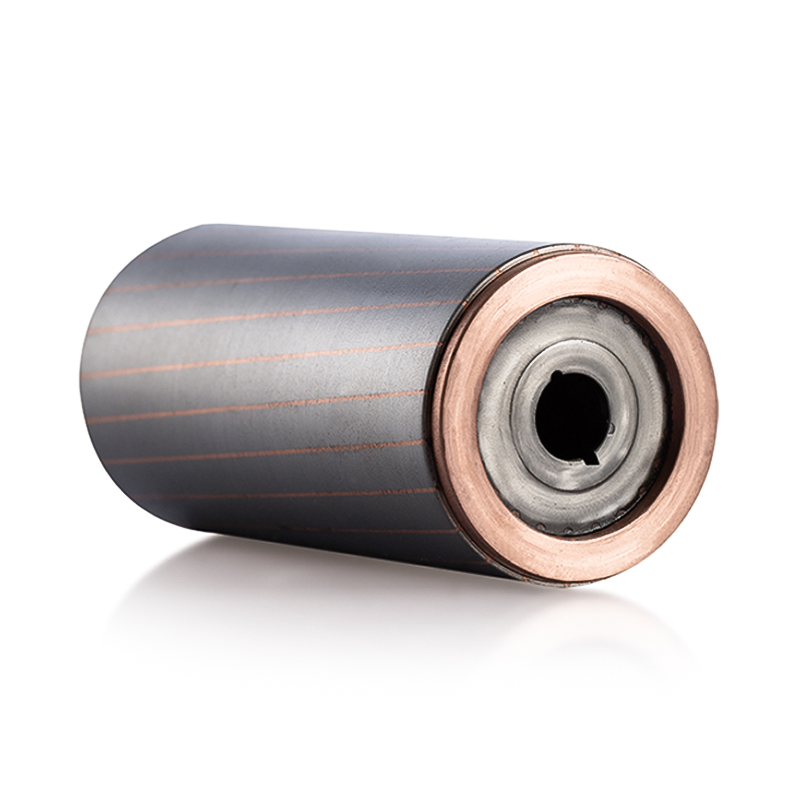
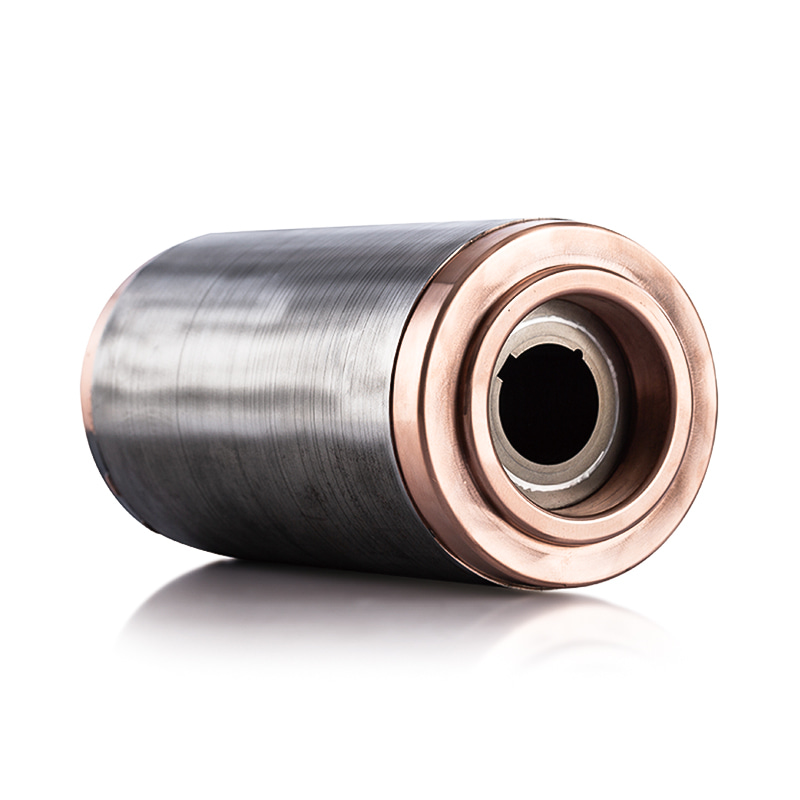
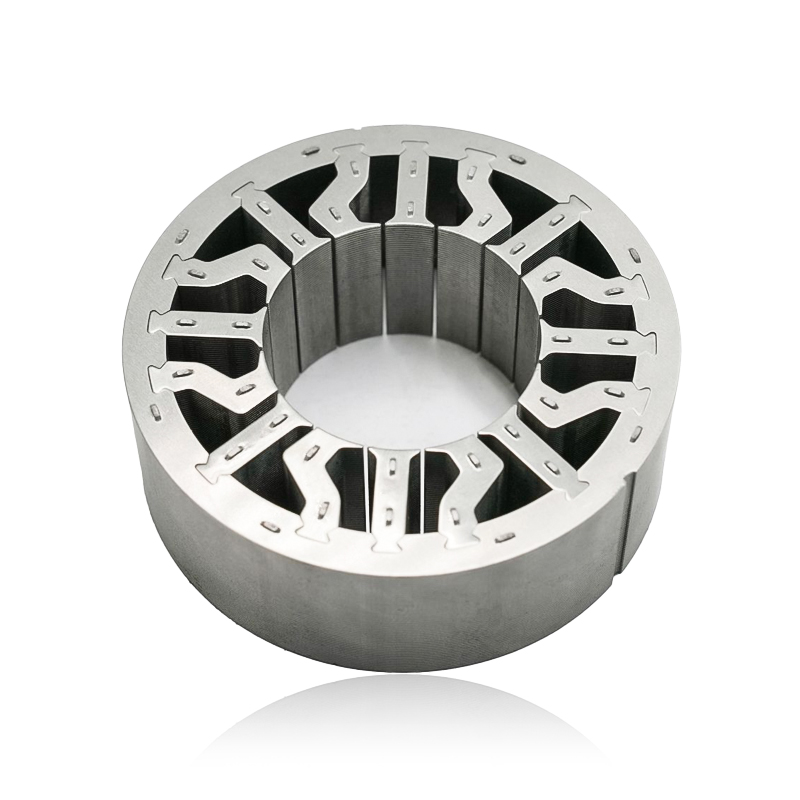
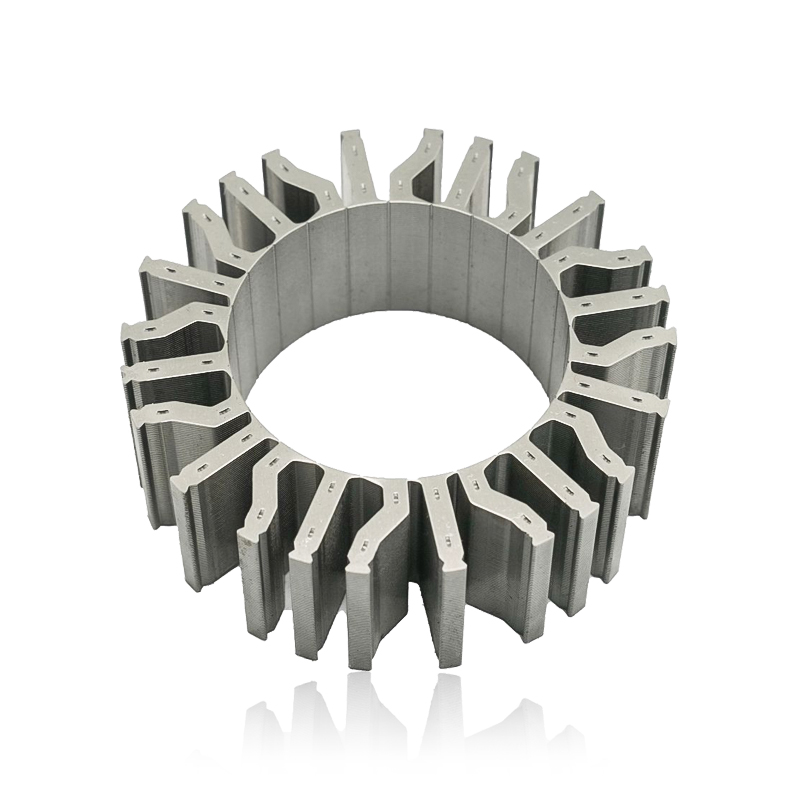
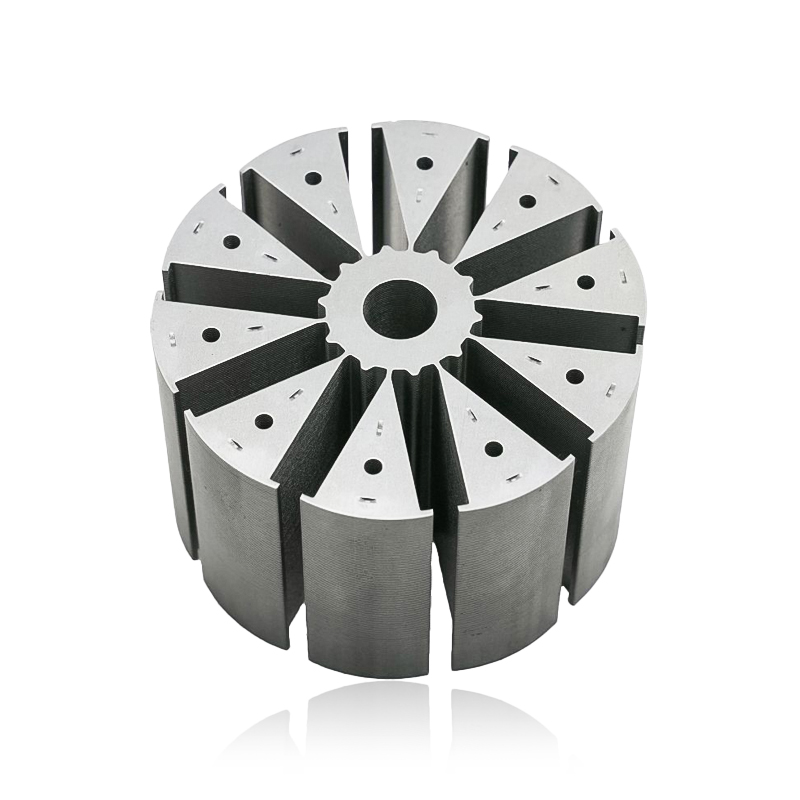
Lamination works by stacking many thin sheets of electrical steel, each coated with a thin insulating layer — commonly an oxide coating or an applied varnish — and assembling them so that the sheets lie parallel to the direction of the magnetic flux. Because each sheet is electrically isolated from the next, any eddy current induced within a given sheet is confined to that sheet's thickness. The current can no longer travel freely from one sheet to the next, which means the maximum possible loop size is limited to the cross-section of a single, very thin lamination rather than the entire core.
This relationship is captured mathematically in the standard eddy current loss formula, where loss is proportional to the square of the lamination thickness. Halving the thickness of each sheet reduces eddy current loss to roughly one-quarter of its previous value, which is why manufacturers of high-performance rotors and stators continually push toward thinner gauge steel wherever cost and manufacturability allow it.
| Lamination Thickness | Relative Eddy Current Loss | Typical Application |
|---|---|---|
| Solid core (no lamination) | 100% | Not used in standard AC machines |
| 0.65 mm | ~14–17% | Standard 50/60 Hz motors |
| 0.35 mm | ~6–8% | Inverter-driven and higher-frequency machines |
| 0.20 mm | ~2–3% | High-speed and premium-efficiency designs |
Eddy Currents vs. Hysteresis Loss: Two Related but Distinct Phenomena
It is worth clarifying that eddy currents are not the only source of core loss, and lamination does not address every loss mechanism equally. The other major contributor is hysteresis loss, which arises from the energy required to repeatedly realign the magnetic domains within the steel as the applied field reverses direction. Hysteresis loss depends on the intrinsic magnetic properties of the steel alloy — its coercivity and the shape of its B-H loop — rather than on the geometric thickness of the material.
Info
Lamination has essentially no direct effect on hysteresis loss. Instead, hysteresis loss is minimized through metallurgical choices: adding silicon to the steel alloy, controlling grain orientation, and applying precise annealing processes.
- Eddy current loss — suppressed primarily by lamination thickness and interlaminar insulation
- Hysteresis loss — suppressed primarily by alloy composition and grain structure, not lamination geometry
- Together, these two mechanisms make up what engineers commonly call total core loss or iron loss
Where This Phenomenon Is Most Aggressive: Rotors, Stators, and Frequency
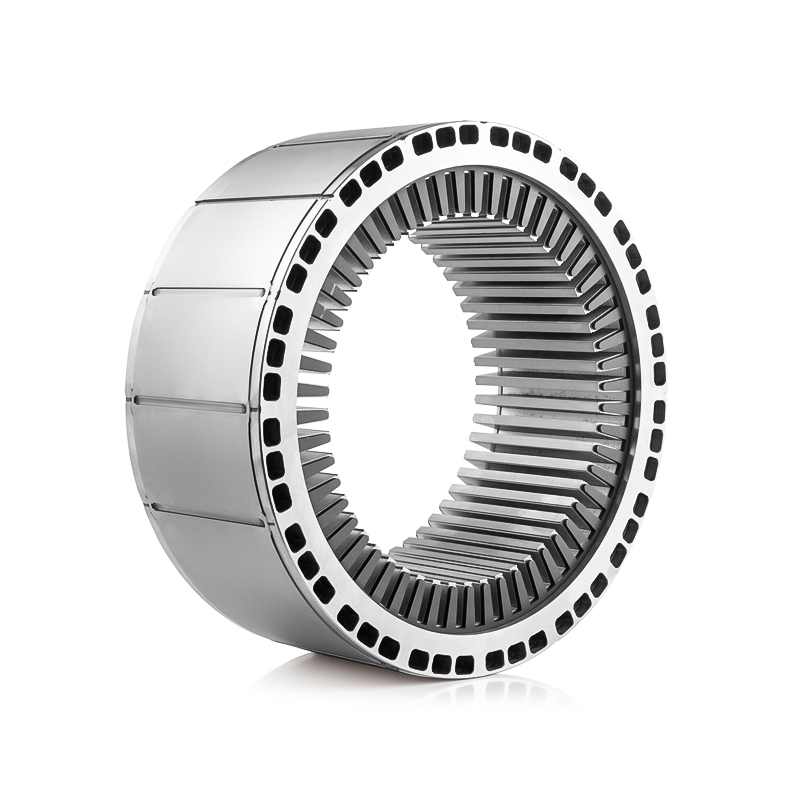
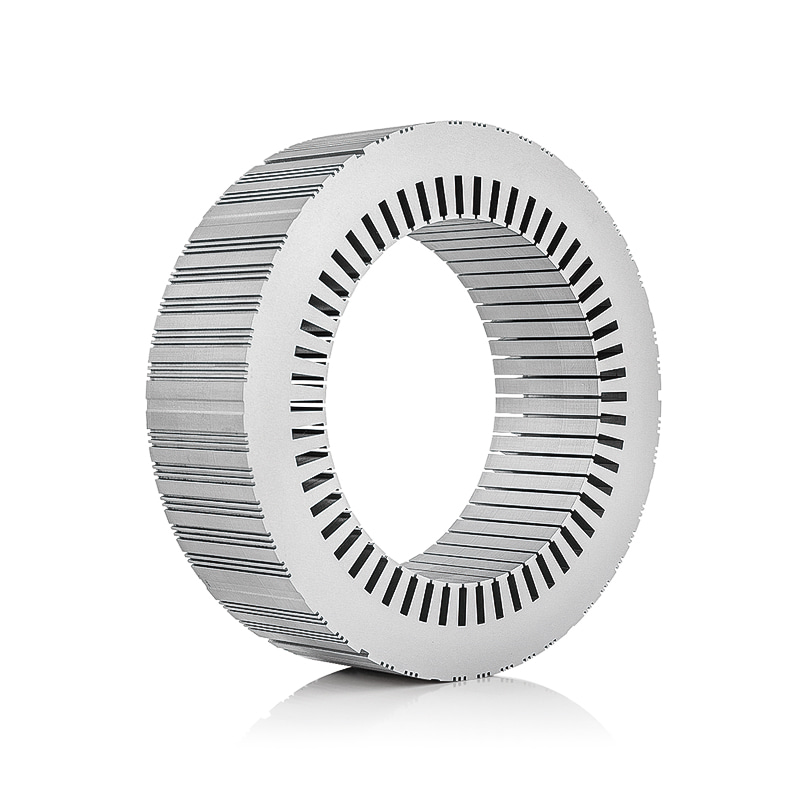
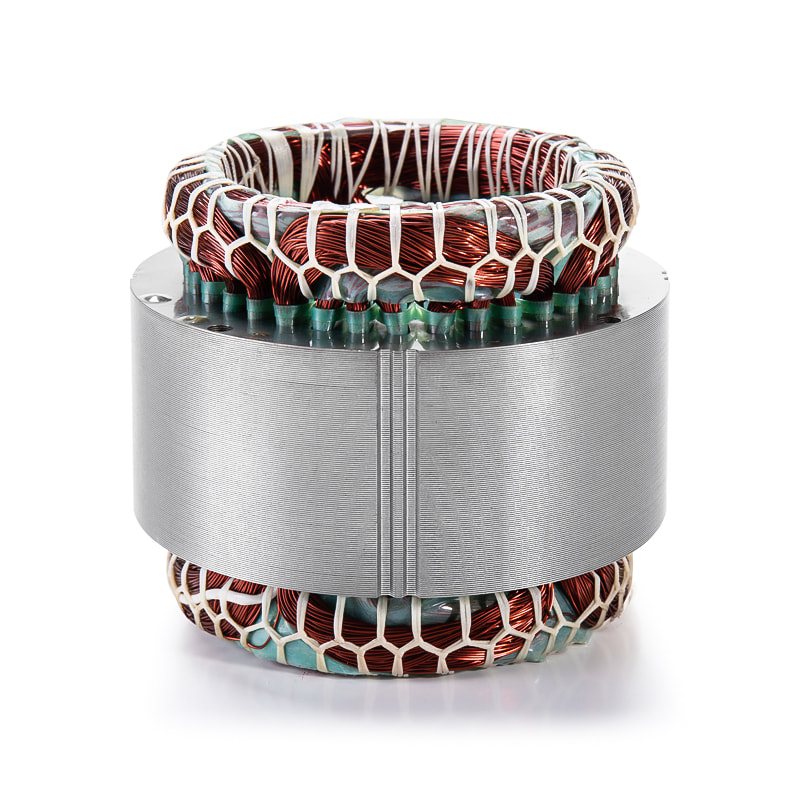
Eddy currents intensify wherever the rate of flux change is highest, which means the phenomenon is not confined to the rotor alone. In a synchronous generator, the generator stator core experiences continuously alternating flux at line frequency and is laminated for exactly the same reason as the rotor: to keep induced current loops small. Similarly, in a rotating field alternator, the alternator stator core sees repeated flux reversals as each rotor pole sweeps past the winding, making lamination equally essential there.
stator core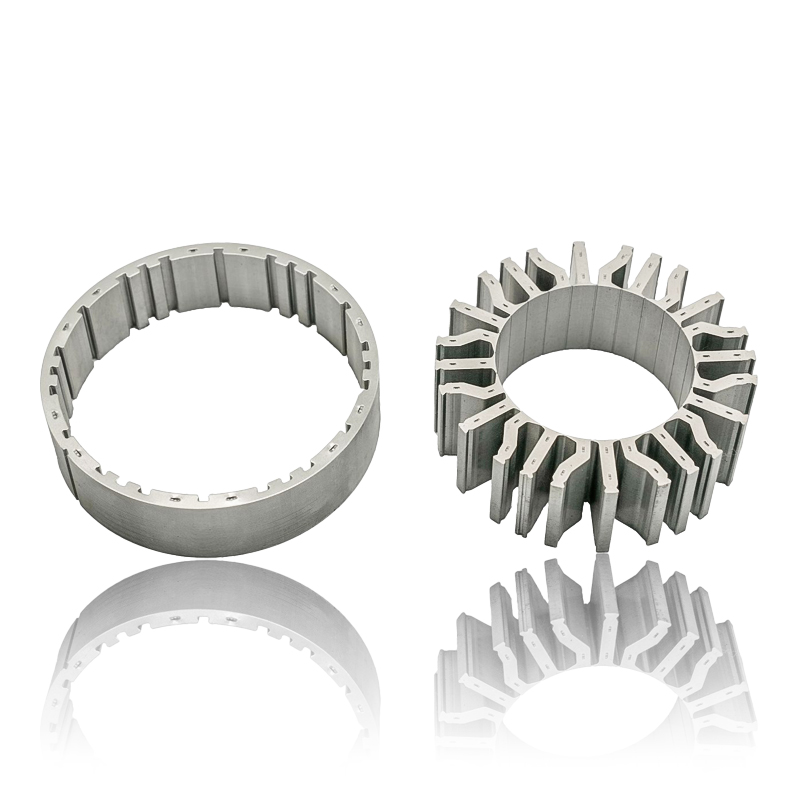
The rotor itself experiences varying degrees of flux change depending on machine type. In a synchronous machine operating at steady speed, the rotor field is essentially DC and stationary relative to the rotor body, so eddy current concerns are lower there than in the stator. In an induction machine, however, the rotor experiences slip frequency flux variation, and in machines exposed to harmonic-rich supplies from variable-frequency drives, both rotor and stator components see elevated effective frequencies that make lamination even more critical.
Frequency Sensitivity
Because eddy current loss scales with the square of frequency, doubling the electrical frequency seen by a core — through faster rotation, higher pole count, or drive-induced harmonics — quadruples the eddy current loss for a given lamination thickness. This is precisely why high-speed machines and drive-fed equipment require thinner laminations than a simple 50 or 60 Hz utility-connected motor.
What Happens When Lamination Insulation Fails
The suppression effect of lamination depends entirely on maintaining electrical isolation between adjacent sheets. If the interlaminar coating is damaged — through mechanical abrasion, overheating, corrosion, or improper handling during core assembly — current can begin to bridge across sheets. When enough bridging occurs, small groups of laminations effectively behave like a single thicker sheet, and the eddy current loops that were once confined to a fraction of a millimeter can span multiple laminations.
The consequences of this degradation are measurable and often serious. Localized hot spots can develop at the site of insulation breakdown, since the power dissipated by an enlarged loop is concentrated in a small area rather than spread evenly across the core volume. Over time, this localized heating can further degrade the surrounding insulation, creating a feedback loop that accelerates core damage.
- Interlaminar insulation degrades due to age, overheating, or mechanical damage
- Adjacent laminations become electrically connected across a portion of the core
- Eddy current loops enlarge across the connected sheets, increasing localized loss
- Localized heating accelerates further insulation breakdown, compounding the problem
Warning
Technicians performing a core loss test or thermal inspection can often identify these hot spots well before they progress to catastrophic insulation failure of the surrounding windings — early detection is far cheaper than a core rebuild.
Why This Matters for Machine Reliability, Not Just Efficiency
While the efficiency implications of eddy current suppression are well known, the reliability implications deserve equal attention. Excessive eddy current heating does not just waste energy — it raises the operating temperature of the core, which in turn accelerates thermal aging of the winding insulation surrounding it. Since insulation life is often estimated to halve for every 10°C rise in sustained operating temperature, even a modest increase in core loss due to lamination degradation can meaningfully shorten the expected service life of a rotor or stator assembly.
Danger
This is one of the reasons why routine maintenance programs for large machines — including periodic core loss testing on a generator stator core or alternator stator core during scheduled outages — remain standard industry practice. Detecting a rise in core loss early allows for targeted repair rather than a full core replacement.
Key Takeaways
Summary
Lamination exists for one primary reason: to suppress eddy currents, the circulating electrical currents induced by changing magnetic flux within a conductive iron core. By dividing the core into thin, electrically insulated sheets, lamination confines these currents to tiny loops rather than allowing them to circulate freely through the full mass of the material, cutting associated losses by 80% or more compared to a solid core of equivalent size. This same principle applies whether the component in question is a rotor, a generator stator core, or an alternator stator core — any structure exposed to time-varying magnetic flux benefits from lamination in proportion to how rapidly that flux changes. Understanding this phenomenon at a physical level is not merely academic: it explains why lamination thickness, steel grade, and insulation integrity are treated as core design and maintenance priorities across virtually every category of rotating electrical machine.