
 简体中文
简体中文 English
 русский
 Español
Home / News / Industry News / Why Is a Stator Core Made of Laminated Steel? Eddy Current Loss Explained
Why Is a Stator Core Made of Laminated Steel? Eddy Current Loss Explained
Open any industrial motor or generator, and the stator looks the same: a cylinder built from dozens of thin steel discs, stacked tightly and insulated from one another. That is not a production convenience. A stator core is made of laminated steel to keep electrical energy where it belongs, in the rotating magnetic field, rather than turning it into heat inside the steel. Lamination suppresses eddy current loss and, combined with the right electrical steel grade, limits hysteresis loss. The result is a cooler, more efficient, and quieter machine.
What Goes Wrong in a Solid Steel Core
To understand the design, start with the failure it prevents. In any motor, the stator carries a magnetic field that changes direction constantly as the rotor turns. According to Faraday's law, a changing magnetic field induces a voltage in any nearby conductor. The stator steel is a conductor, so that voltage drives circulating currents called eddy currents inside the core. In a solid block of steel, those currents flow through large loops, and the resistance of the steel converts them directly into heat. That heat is wasted energy that never reaches the rotor shaft and, worse, it accumulates inside the motor.
The practical impact is severe. A solid-core stator runs hot enough to degrade the winding insulation within a short operating life. That is why solid-core stators are not used in real motor production: the performance cannot meet the efficiency and reliability that customers expect. Lamination exists to break the current loop before the heat is created.
How Laminations Control Eddy Currents
A laminated stator is built from thin sheets of electrical steel, typically 0.35 mm to 0.65 mm per sheet, and each sheet carries a thin insulating coating. Because the sheets are electrically isolated from one another, an eddy current cannot cross between them. The current is confined to the cross-section of a single sheet, so the conducting path is short, its induced voltage is low, and the heat generated is small. This effect scales with thickness: eddy current loss is proportional to the square of the lamination thickness. Halving the thickness cuts eddy current loss by roughly three quarters. That scaling relationship drives the lamination thickness selection in every motor design.
| Lamination thickness | Typical applications | Key trade-off |
|---|---|---|
| 0.20-0.35 mm | EV traction motors, high-speed servo drives | Lowest core loss; more demanding stamping and handling |
| 0.50 mm | General industrial motors, home appliances, pumps | Established balance of loss, cost, and mechanical strength |
| 0.65 mm | Large generators, heavy industrial motors | Lower part cost; slightly higher core loss; good packing density |
The choice is not purely electrical. Thinner laminations mean more sheets per stack, more stamping strokes per core, and a lower stacking factor, the ratio of steel to total core volume. Suppliers weigh these factors against the efficiency target of the motor.
Hysteresis Loss and the Role of Silicon Steel
Eddy currents are half the problem; hysteresis loss is the other half. Every time the magnetic field reverses, the magnetic domains inside the steel rotate to align with the new field direction. That rotation consumes energy, which appears as heat. Hysteresis loss repeats every cycle, so the higher the operating frequency, the more significant it becomes.
Laminating the steel does not eliminate hysteresis loss; the material must do that work. Stator laminations are therefore made from silicon electrical steel, an iron-silicon alloy that typically contains 1% to 4% silicon by weight. Silicon raises the electrical resistivity of the steel, which also suppresses eddy currents, and it reduces hysteresis loss and magnetostriction. Non-oriented electrical steel is the standard grade for stator cores because the magnetic flux changes direction within the plane of each lamination rather than following a single fixed axis.
Not Just Efficiency: Heat, Noise, and Service Life
Core losses do not stop at the efficiency number on a datasheet. Their main by-product, heat, changes the operating life of the whole motor. Winding insulation ages roughly exponentially with temperature, so keeping the core cool is as important as keeping the copper cool. The steel itself also contributes to acoustic noise through magnetostriction, the slight expansion and contraction of the material as the magnetic field changes. A core built from high-grade laminations with controlled stacking keeps vibration lower and reduces the magnetic noise component in the motor housing.
For automotive and servo applications, stack quality matters even more because flatness and axial tightness directly affect rotor dynamics and NVH performance. In an electric vehicle, the inverter supplies high-frequency current harmonics that increase eddy current loss sharply in thicker steel. That is why EV drive motor stator and rotor cores are usually stamped from 0.25 mm or 0.35 mm non-oriented electrical steel with a very consistent insulating coating.
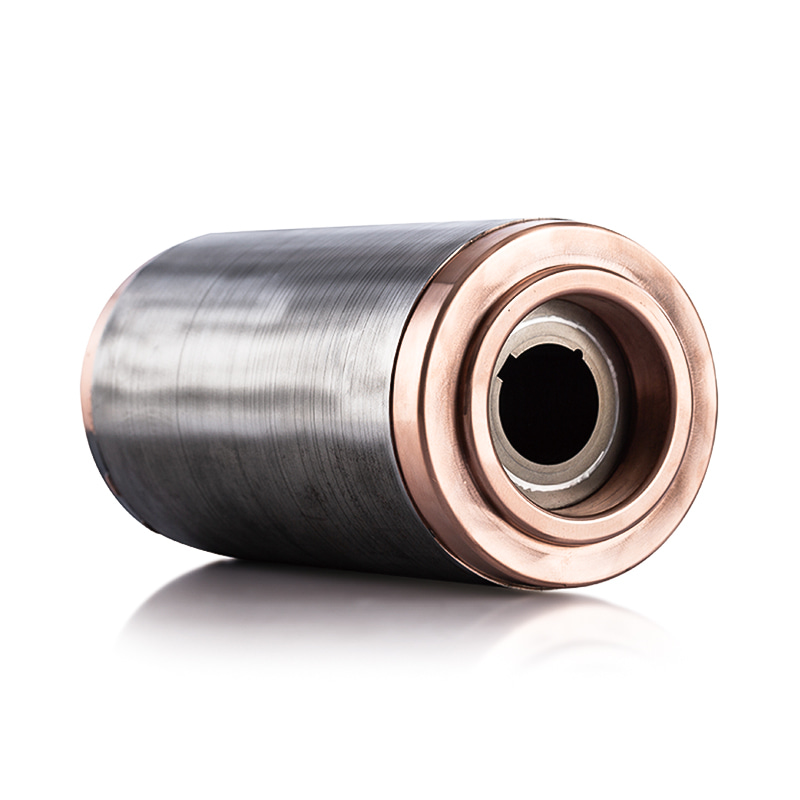
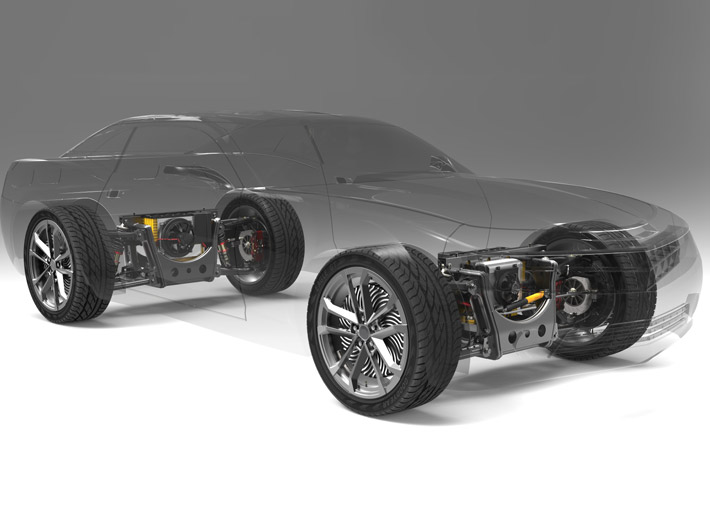 Electric Vehicle Drive Motor Stator/Rotor Core Manufacturers, SuppliersAs China Electric Vehicle Drive Motor Stator/Rotor Core Manufacturers and Suppliers, Zhejiang Jufeng Technology provide OEM/ODM Electric ...View Product →
What Makes a Lamination Stack Reliable in Production
Material and thickness can be specified on paper, but the finished core is built in a press. The actual quality of a laminated stator depends on manufacturing details:
- Burr height on the punched sheet. If it is too large, the edges of adjacent sheets can touch and bypass the insulation, recreating the eddy current loop.
- Stacking factor. Good tooling and flat sheets achieve 95-97% steel volume; lower values mean more copper or a larger motor to reach the same flux.
- Coating integrity. Scratches or burns introduced during stamping create conduction paths between sheets.
- Stacking method. Interlocking, welding, or bonding each changes core loss and stiffness; welding can short-circuit sheets locally if process parameters drift.
For high-volume production, such as home appliance motor stator and rotor cores, manufacturers frequently choose a proven 0.50 mm grade with a standard C5 coating, then control burr height and stacking pressure so that every batch matches the core loss of the first sample.
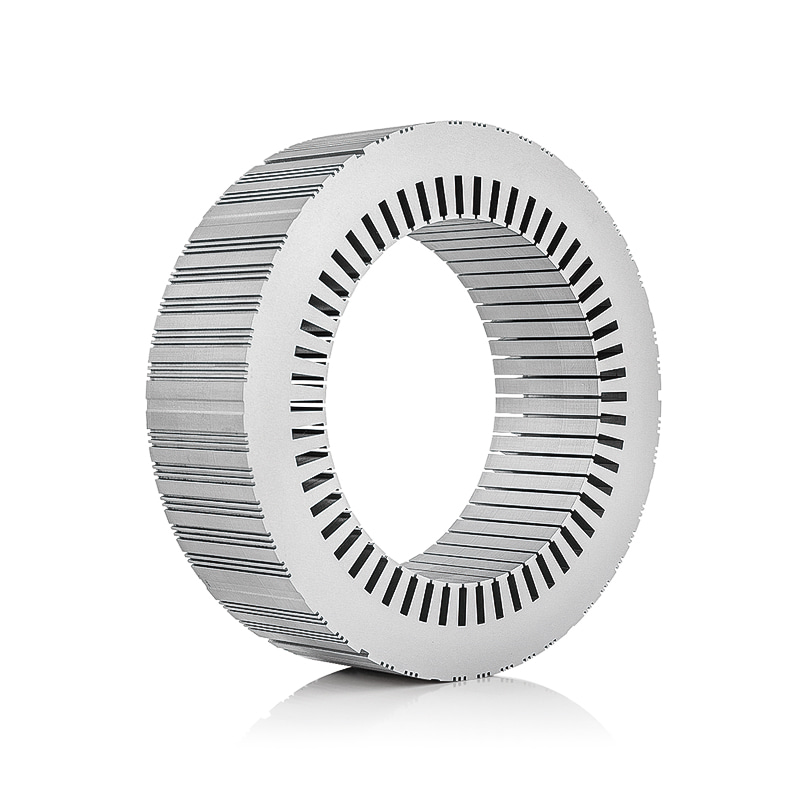
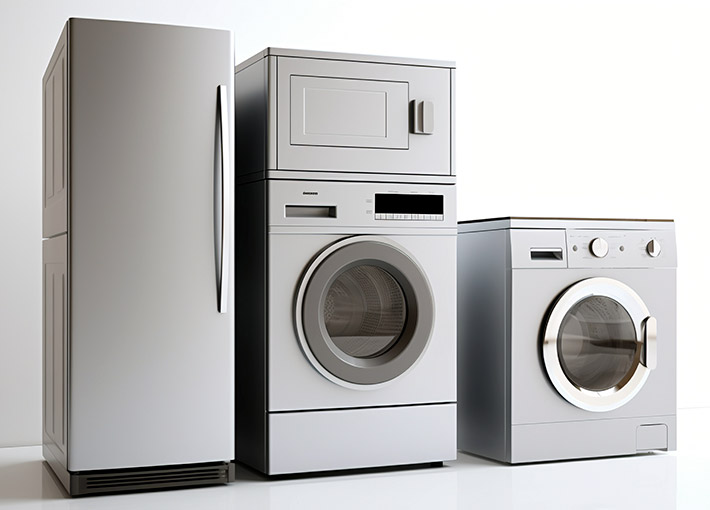 Home Appliance Motor Stator/Rotor Core Manufacturers, SuppliersZhejiang Jufeng Technology Co., Ltd. is China Home Appliance Motor Stator/Rotor Core Manufacturers and OEM/ODM Suppliers, we Custom Home ...View Product →
Sourcing Stator Cores: Questions to Ask a Supplier
When a motor design depends on a specific core loss value, the supplier's process controls matter more than the quoted steel grade. Ask to see material certificates for every lot, the guaranteed burr height over the full die life, and core loss data measured on finished stacks rather than only on raw strip. Also check how the supplier handles deburring and insulating coatings, since those process steps determine whether the lamination remains electrically consistent. Large-diameter stators introduce a further constraint: a one-meter wind generator stator cannot be punched as a single ring, so wind power generator motor stator and rotor cores are manufactured in segments. Segmented tooling is economical only when the supplier can hold interface tolerances between segments; otherwise the magnetic circuit suffers at the joints.
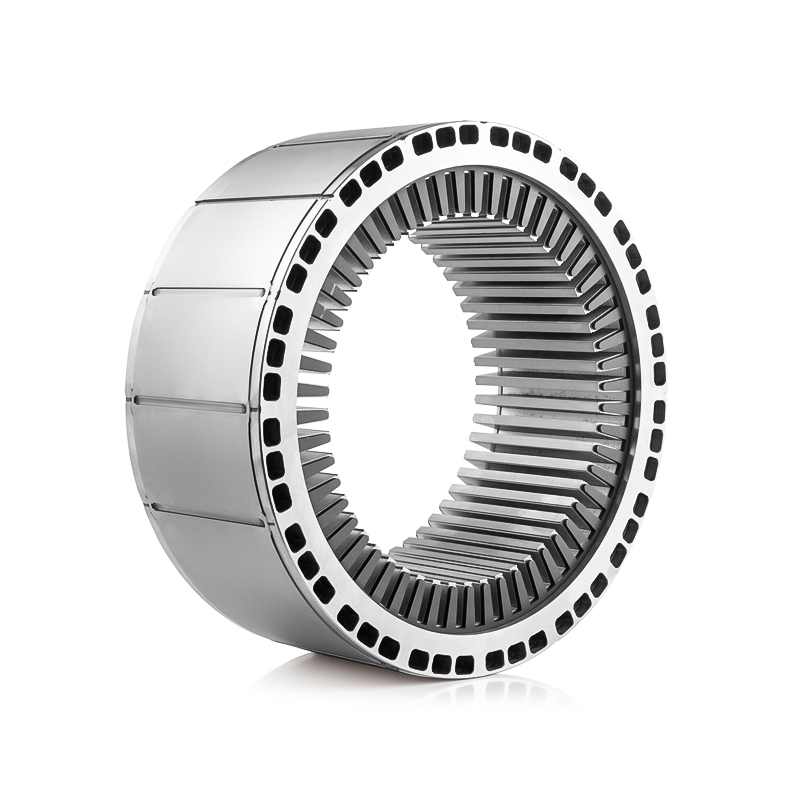
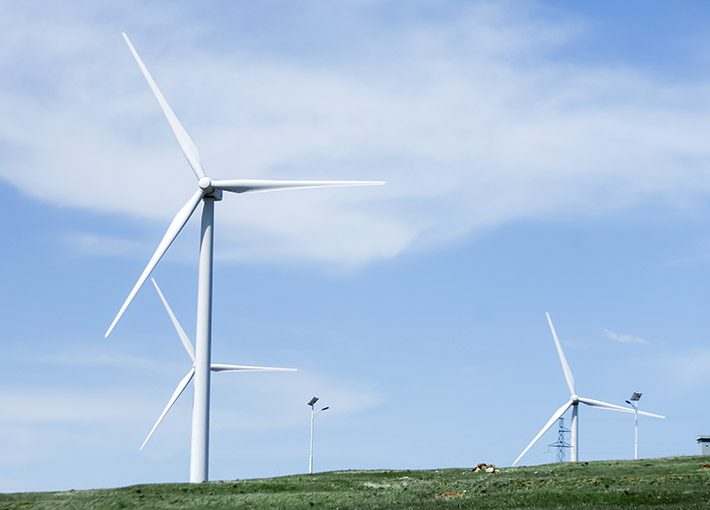 Wind Power Generator Motor Stator/Rotor Core Manufacturers, SuppliersZhejiang Jufeng is China Wind Power Generator Motor Stator/Rotor Core Manufacturers and OEM/ODM Suppliers, we custom Wind Power Generator...View Product →
To evaluate a supplier across different motor families, look at the range of motor stator and rotor cores we manufacture, from automotive traction to industrial drives to appliance motors. When you know the operating frequency, temperature class, and core loss target of your motor, contact our application engineering team with your specification. A stator core is a magnetic component first and a stamped part second; the supplier's ability to hold both properties consistently is what keeps your motor's efficiency curve real.
A stator core is laminated for one primary reason: to control eddy current loss, with secondary gains in hysteresis loss, heat, noise, and material choice. Laminations are not a packaging detail; they are the central design decision in the magnetic circuit. The right combination of steel grade, sheet thickness, coating, and stacking process determines whether the motor reaches its rated efficiency in production. Specify those values carefully, and verify the process behind them.
Previous article
What Is a Motor Stator Core? Definition, Laminations, Losses and Manufacturing
next article
How Stator Core Laminations Are Manufactured: Process, Materials & Quality Control
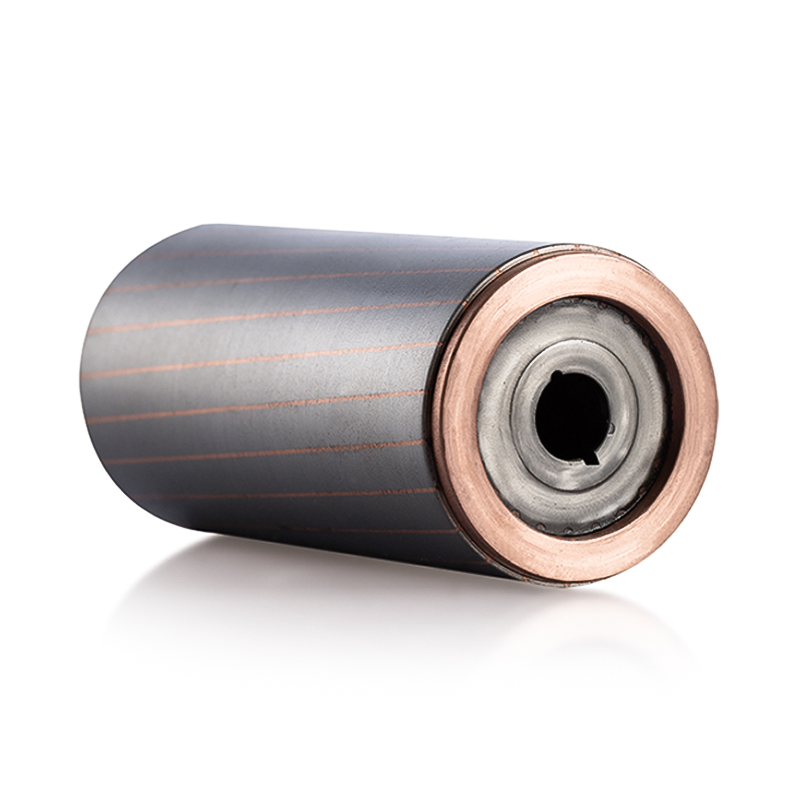
Related News
-
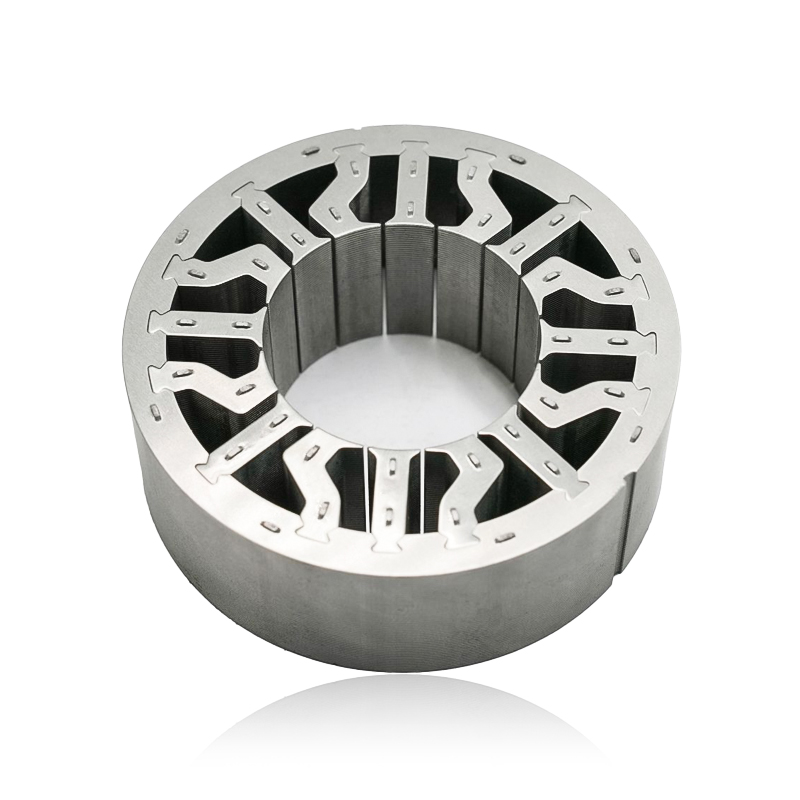
What are Stator and Rotor Cores? Stator Cores A stator core is the stationary component of an electric motor. It's the part that houses the copper windings, which, when an electric current passes thro...
See Details -
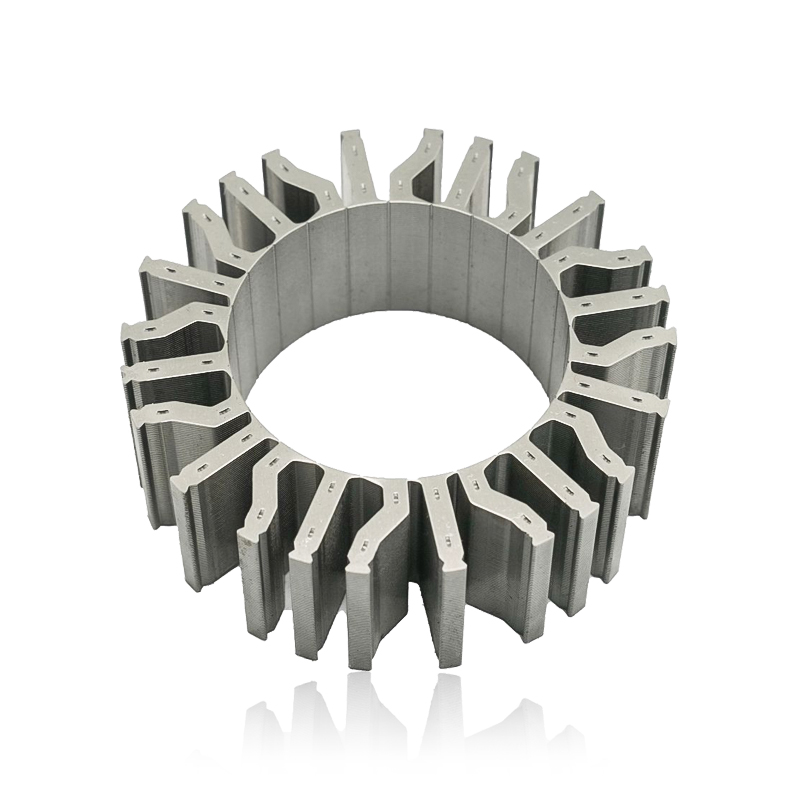
Introduction The modern automobile is a complex machine, and its evolution has been driven by continuous innovation in every component. While internal combustion engines have dominated the industry fo...
See Details -
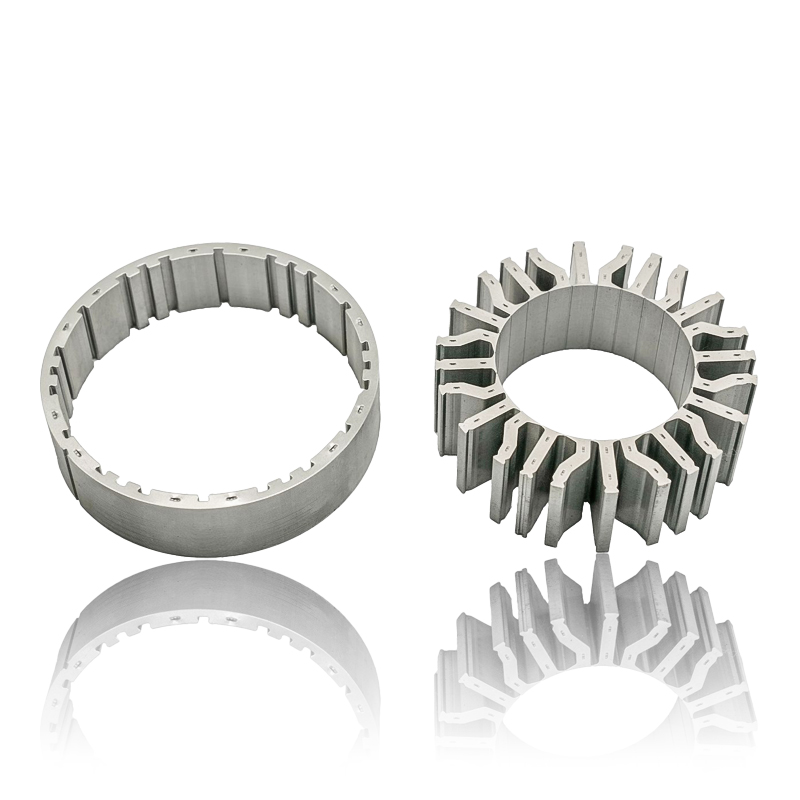
The Importance of Material Selection for Rotor and Stator Cores in Electric Vehicle Motors In the design of electric vehicle (EV) motors, material selection is a pivotal factor influencing the motor’s...
See Details -
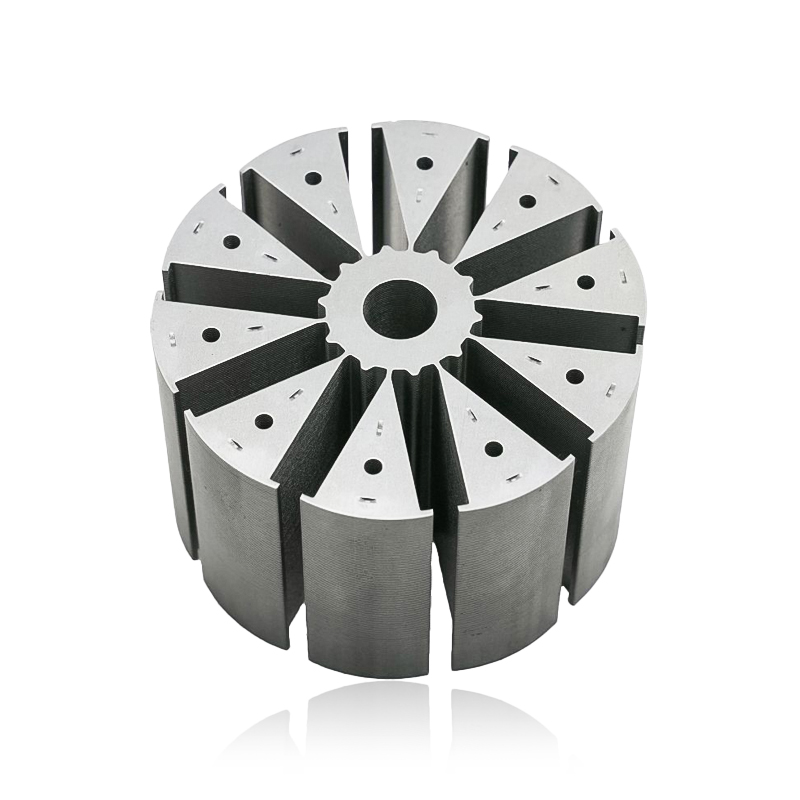
Introduction of automotive motor stator and rotor cores The increasing popularity of electric vehicles and hybrid electric vehicles has brought about significant advancements in automotive technology....
See Details


Zhejiang Jufeng Technology Co., Ltd. © All rights reserved
