
 简体中文
简体中文 English
 русский
 Español
Home / News / Industry News / The Function of the Generator Stator Core: Flux, Support, Heat, and Vibration
The Function of the Generator Stator Core: Flux, Support, Heat, and Vibration
Every generator contains a component that receives little attention yet sets the ceiling for efficiency, temperature rise and service life: the stator core. In a turbine machine, a wind turbine or an industrial gen-set, the core's headline function is to guide magnetic flux so the stationary windings can induce voltage. In practice the core works far harder. It supports the winding, conducts heat out of the machine, absorbs mechanical stress and helps control noise. Understanding the full breadth of that function is what separates a core that merely works from one that keeps working for decades.
What the Generator Stator Core Actually Does
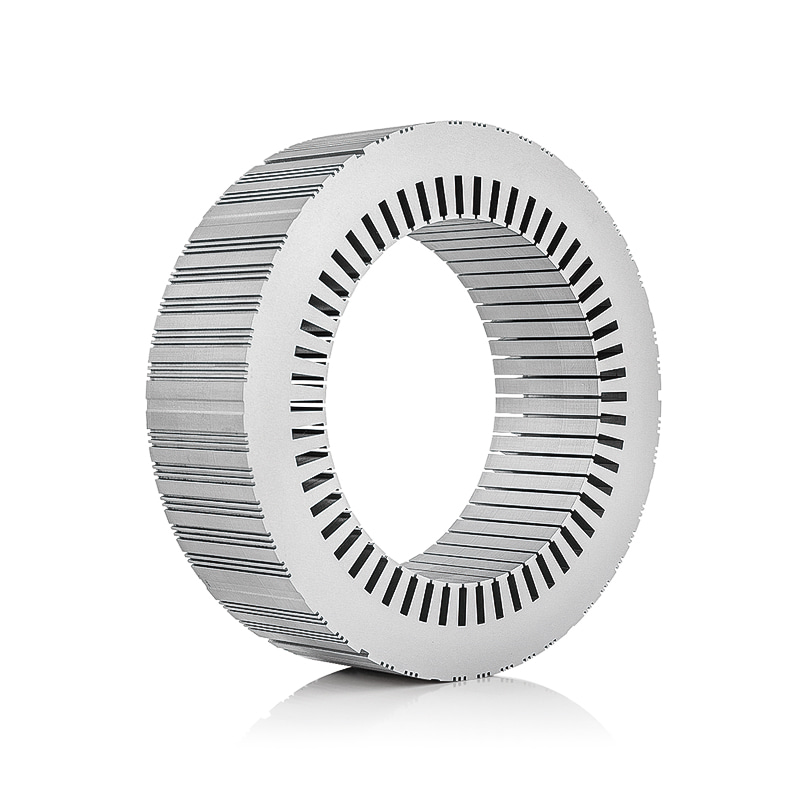
At its most basic, the stator core is a laminated iron cylinder pressed into the generator frame. Electromagnetically, it provides a low-reluctance path for magnetic flux from one rotor pole, around the outside of the stator winding, and back into the opposite pole. As the rotor spins, the flux linked with each stator coil changes continuously; that changing flux induces voltage in the coils, and alternating current appears at the terminals. The core does not generate energy itself. It concentrates and steers the magnetic field so the copper winding can convert mechanical power into electrical power.
That description is correct but incomplete. The stator core is also the part that holds the winding in position against torque reaction, carries winding heat to the frame and cooling medium, and dampens the magnetically induced vibration created by every passing rotor pole. A stator core is therefore a magnetic component, a structural component and a thermal component at the same time. Its function cannot be judged from electromagnetic calculations alone.
Four Functions, One Laminated Assembly
When an engineer specifies a stator core for a generator, four functions have to be satisfied at once. Each places a different demand on the lamination design, the material and the stacking process.
| Function | Physical role | Design demand |
|---|---|---|
| Flux guidance | Provides a low-reluctance magnetic path between rotor poles and around the winding ends | High-permeability electrical steel; correctly proportioned teeth and yoke |
| Voltage induction | Keeps the coils inside a changing flux field so EMF is induced in every conductor | Accurate slot geometry; tight lamination stacking factor |
| Structural support | Resists radial magnetic forces and winding torque without distortion | Controlled stack pressure; precise bore geometry; rigid clamping |
| Heat transfer and damping | Carries copper and iron losses to the frame; absorbs magnetostriction and pole-pass vibration | Good thermal contact; bonded or interlocked sheets; uniform compaction |
Each demand has consequences elsewhere. A slot shape that maximises flux transfer may leave too little steel in the tooth for mechanical strength. A core pressed too hard achieves a high stacking factor but squeezes the interlaminar insulation into early failure. This is why the stator core remains a balancing act rather than a simple stamped part.
Why Thin Laminations Carry the Performance
A solid iron stator would work magnetically, but it would also act like a short-circuited turn around the shaft. The rotating field induces large eddy currents in the iron, wasting output as heat. Laminating the core breaks the iron into thin insulated sheets, interrupting the eddy-current path at every interface. The thinner the sheet, the lower the eddy-current loss — which is why efficiency-driven designs move from 0.50 mm to 0.35 mm material, and to 0.20 mm in special cases.
Info Core loss is the sum of two components: hysteresis loss, from re-magnetising the steel each cycle, and eddy-current loss, from currents circulating inside each sheet. Both appear as heat, and both are set by material grade and lamination thickness.
Electrical steels address both loss mechanisms. Silicon increases the resistivity of the steel, directly reducing eddy currents, and grain-oriented processing reduces hysteresis in the rolling direction. Generator stators rarely use grain-oriented grades because the flux rotates inside the teeth, so practical cores are built from cold-rolled non-oriented silicon steel in grades such as 35JN440, 50JN470 or equivalents, with a specified coating between sheets.
A stator core is not a block of iron. It is a precise assembly of insulated magnetic sheets, and most generator reliability problems begin at the boundaries between those sheets.
The practical measure of that assembly is the stacking factor — the ratio of steel to total core volume. A well-built generator core reaches about 0.95 to 0.97. Below that, the same machine needs more steel, runs hotter, or both.
How Generator Type Changes the Rules
The fundamental function never changes, but the emphasis shifts with the application.
Turbine generators
Large turbine generators carry very high flux and must dispose of enormous losses. Segmented cores with radial cooling ducts are standard; laminations are selected for low loss at power frequency, and the core is designed to hold its roundness under magnetic pull and temperature gradients.
Wind generators
Wind generators run at low speed with a large diameter and many poles. The stator core is large in cross-section but lightly loaded electrically; the dominant concerns are mass, partial-discharge resistance and the ability of the stack to hold its shape under uneven radial loads. These are the machines where small manufacturing inconsistencies show up fastest as noise and vibration.
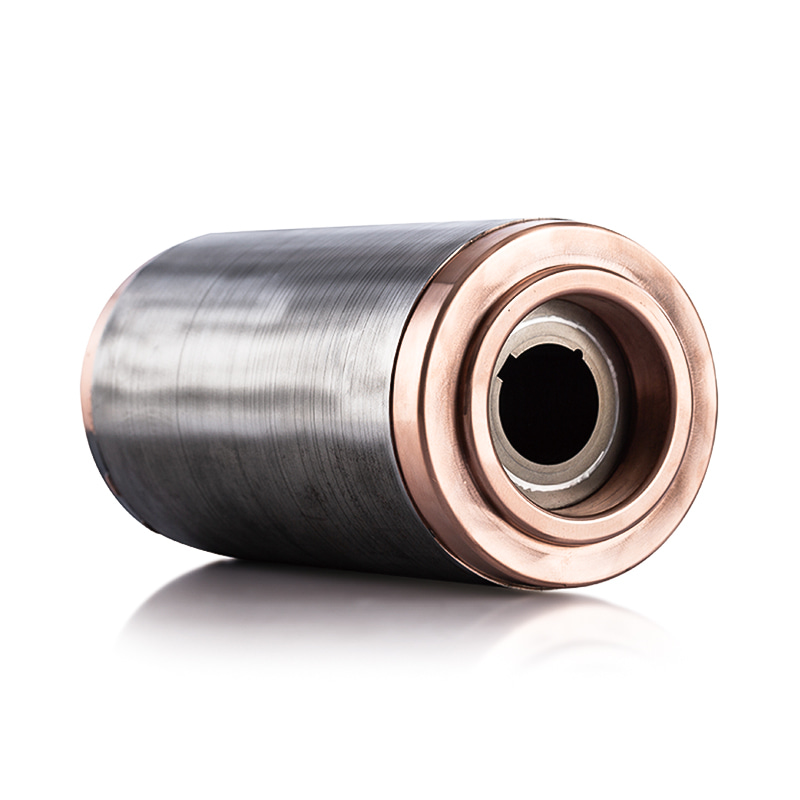
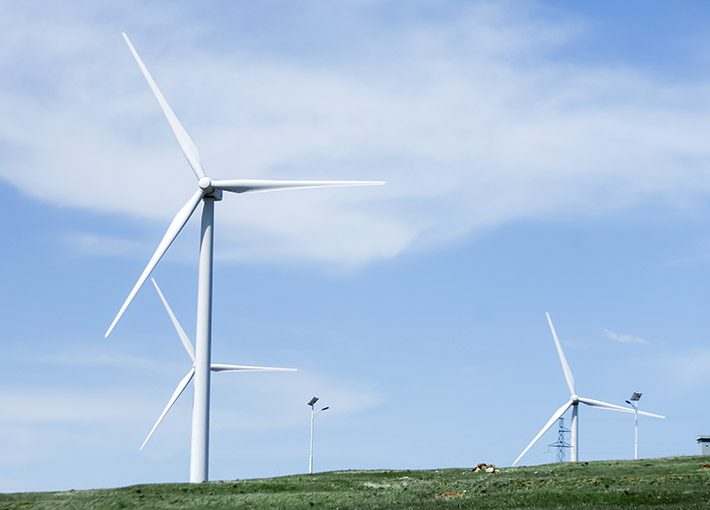 Wind Power Generator Stator and Rotor Core LaminationsThis supplier offers laminated stator and rotor cores for wind turbines from 750 kW to 3.5 MW, including doubly fed and direct-drive types. Their high-permeability steel and precision stacking suit large-diameter, lightly loaded generators where mass and shape stability matter.View Product →
Industrial and standby gen-sets
Industrial and standby generator sets operate at the efficiency-cost boundary. The stator core must deliver high output from a compact frame, which means high flux density, tight slot fill and a short heat path to the outer housing. These machines dominate volume production, and small differences in lamination quality show up directly in temperature rise.
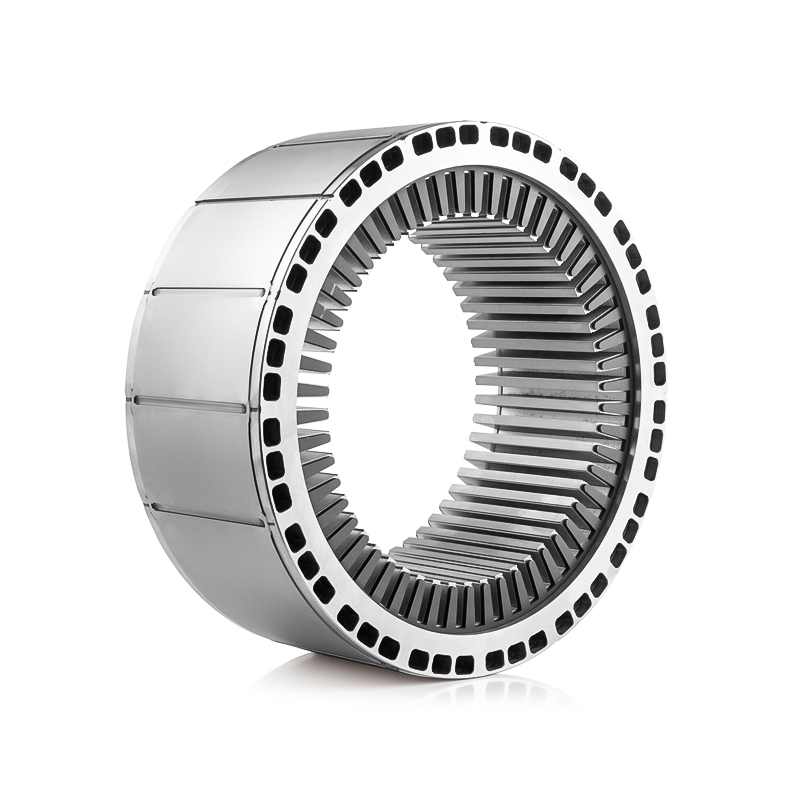
 Generator Motor Stator and Rotor Core for Diesel SetsExplore this range of stator and rotor cores built for industrial and standby generator sets. The page details material grades, stacking methods, and engineering notes that help you match core quality to compact-frame efficiency and temperature-rise requirements.View Product →
What to Specify When You Source a Stator Core
Whether you buy cores for large wind machines or compact industrial generators, the same specification points decide whether the part will meet its magnetic function. The material grade deserves special attention because it fixes the loss baseline; our guide to choosing the right generator stator core material walks through the trade-offs in practical terms. The remaining points are the shortlist our engineers use when reviewing a new enquiry:
- Electrical steel grade with guaranteed specific core loss, referenced to a standard such as IEC 60404.
- Lamination thickness, typically 0.35 mm or 0.50 mm, and the insulation coating between sheets.
- Stacking factor target, usually 0.95 or higher for generator cores.
- Burr height limit on tooth edges after stamping, commonly 0.03 to 0.05 mm.
- Dimensional tolerances for bore, outside diameter and stack height.
- Verification method: dimensional report, stack weight check, core-loss sampling or a full stack test.
Warning Burrs are not a cosmetic issue. A burr that stands above the lamination surface can cut through the winding insulation when copper is inserted or when the machine vibrates in service, and a turn-to-turn fault follows.
None of these values is fixed across all generators. An intermittently loaded gen-set can tolerate a wider burr limit than a wind generator designed for twenty years of continuous operation, and a 0.35 mm lamination is wasted on an oversized 50 Hz machine. Specification is a negotiation between cost and reliability, not a maximum-content shopping list.
Why Manufacturing Quality Is Part of the Function
A stator core design only fulfils its function when the manufacturing process reproduces it with discipline. At Jufeng Technology, stator and rotor cores are our only product line. Generator parts run through the same gates as every other core: incoming coil material certification, burr checks after stamping, stacking factor and stack height control during assembly, and finished-core inspection before shipment. That is why customers share magnetic loss data with us rather than only dimensional drawings — the magnetic result is the deliverable.
The automotive branch of the catalogue forces even tighter control. Cores for electric-vehicle generator motors hold the same electromagnetic function inside an engine bay, which calls for tougher insulation, smaller tolerances and documented consistency across every batch.
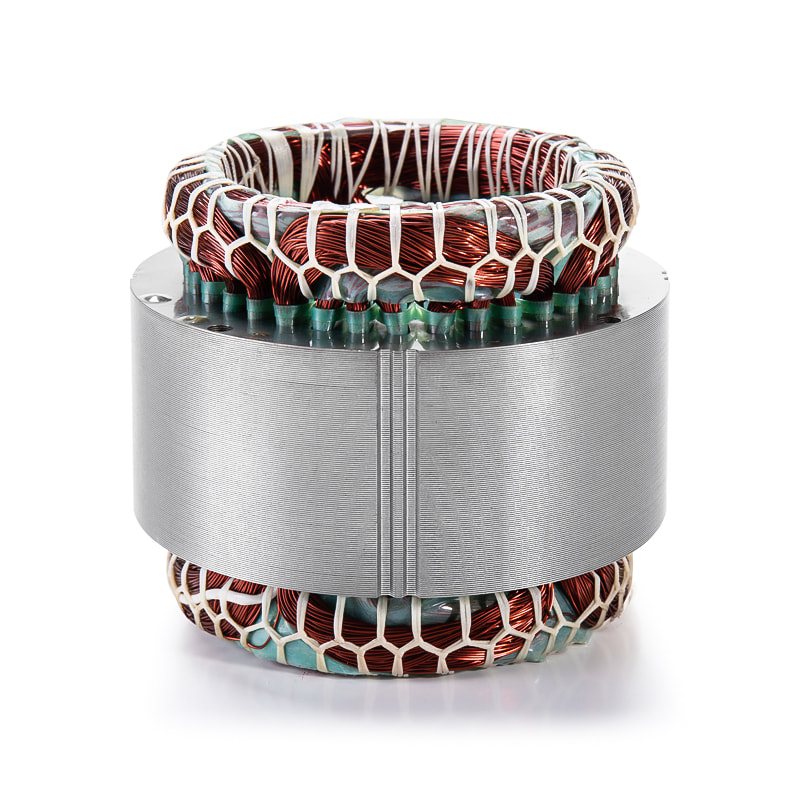
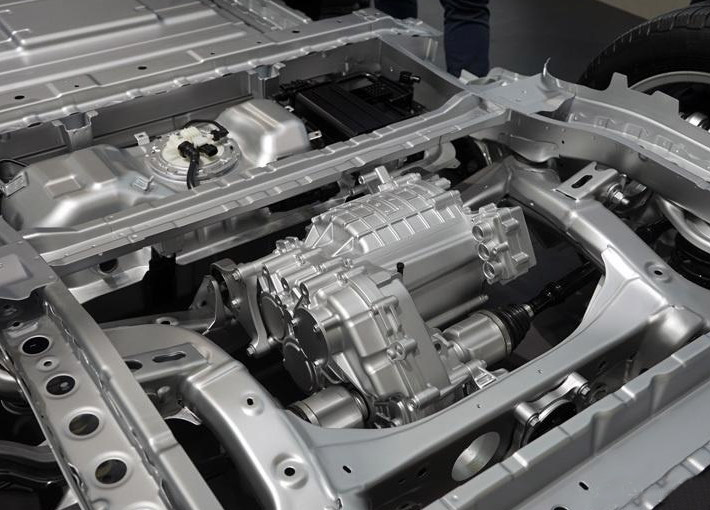 Electric Vehicle Generator Motor Stator and Rotor CoreThis product page presents stator and rotor cores for EV generator motors, with laminated electrical steel to cut eddy-current losses and tight tolerances for consistent batch performance. It includes example rotor dimensions, supporting their role in compact, high-efficiency automotive generators.View Product →
Success When you evaluate a stator core supplier, ask for three things: a material certificate identifying the electrical steel grade, a dimensional report with actual measured values, and a core-loss or stack weight result proving the stack was built to target.
Danger Post-stack machining can destroy the electromagnetic function. Grinding, broaching or EDM work on a stacked core must be qualified to ensure the process does not smear metal across the sheets and create local short circuits.
The function of the generator stator core is defined in two places: on the electromagnetic drawing and on the production floor. A core that delivers the calculated flux, stays within temperature and remains quiet for the life of the machine is doing its job perfectly — which is to say, nobody notices it. If you are developing a generator and want a stator core partner who understands both halves of that equation, talk to our engineering team directly.
Previous article
The Role of Stator Core Laminations: Efficiency, Heat, Noise & Sourcing
next article
Typical Efficiency of Electric Motors: Real Ranges by Type, Size, Load and Losses
Related News
-
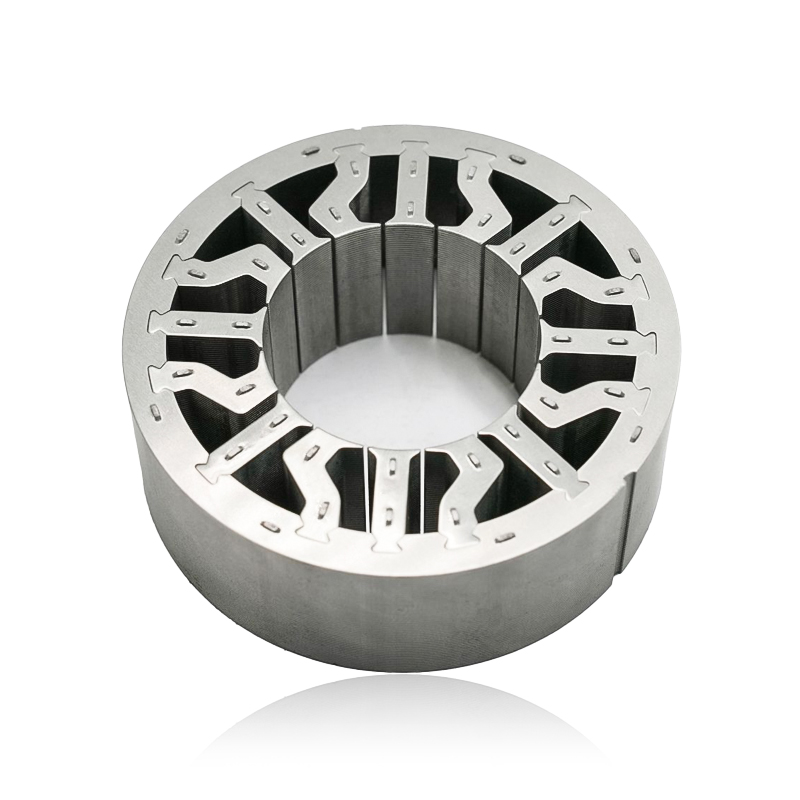
What are Stator and Rotor Cores? Stator Cores A stator core is the stationary component of an electric motor. It's the part that houses the copper windings, which, when an electric current passes thro...
See Details -
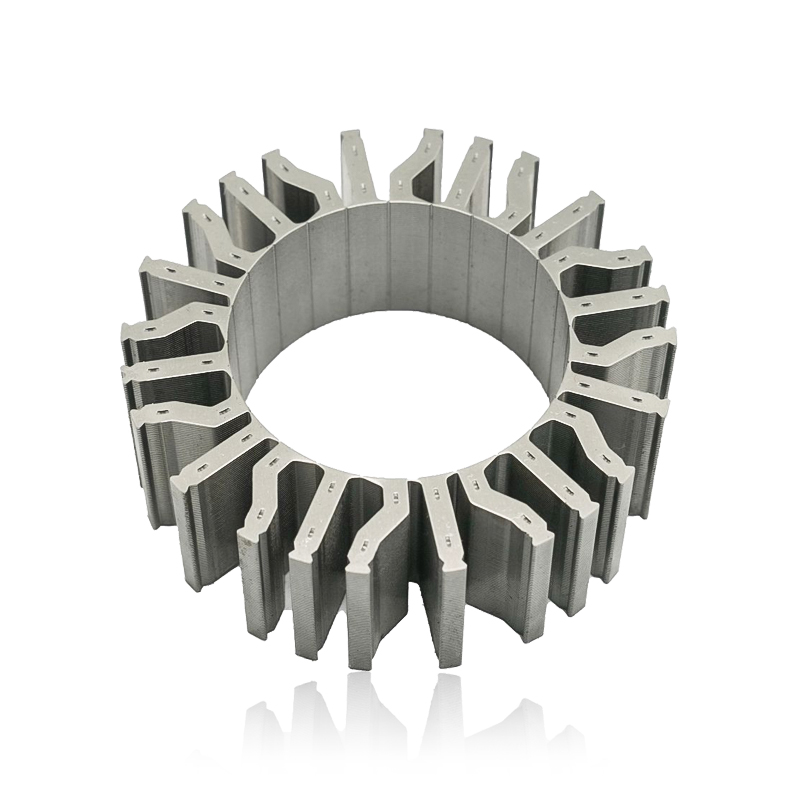
Introduction The modern automobile is a complex machine, and its evolution has been driven by continuous innovation in every component. While internal combustion engines have dominated the industry fo...
See Details -
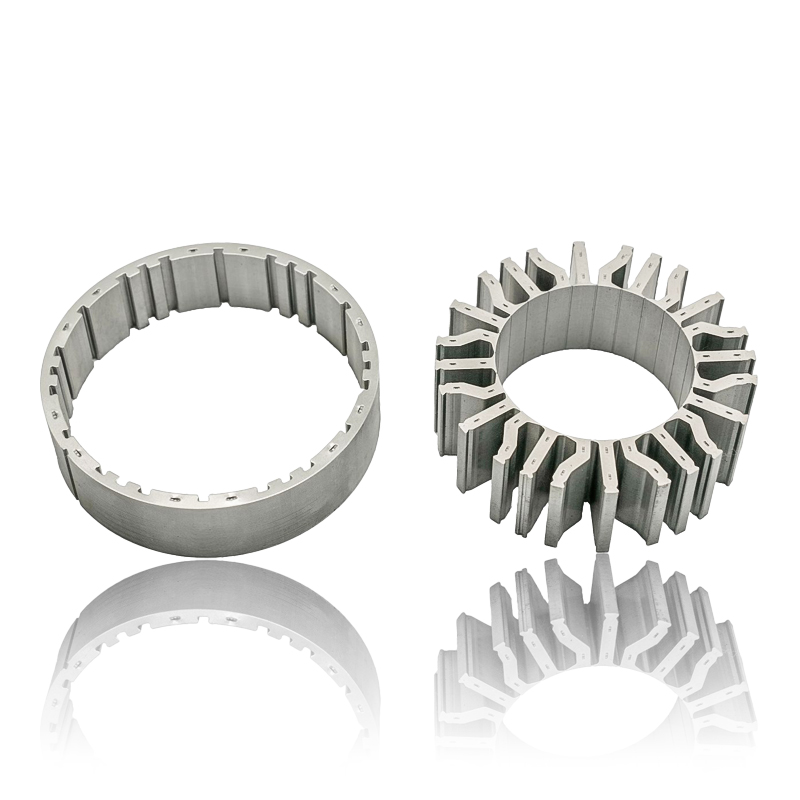
The Importance of Material Selection for Rotor and Stator Cores in Electric Vehicle Motors In the design of electric vehicle (EV) motors, material selection is a pivotal factor influencing the motor’s...
See Details -
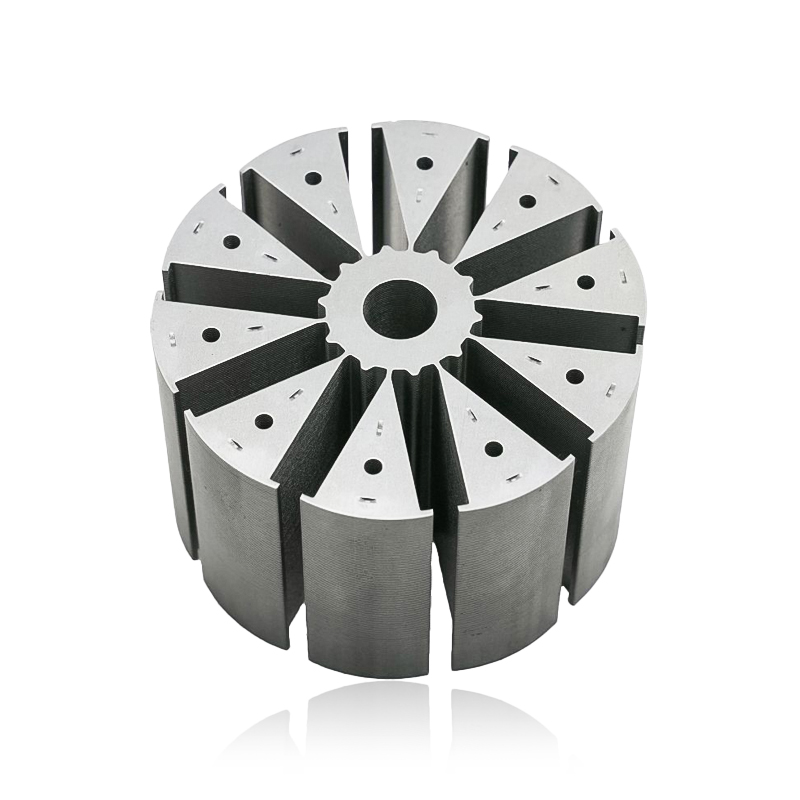
Introduction of automotive motor stator and rotor cores The increasing popularity of electric vehicles and hybrid electric vehicles has brought about significant advancements in automotive technology....
See Details


Zhejiang Jufeng Technology Co., Ltd. © All rights reserved
