
 简体中文
简体中文 English
 русский
 Español
Home / News / Industry News / Typical Efficiency of Electric Motors: Real Ranges by Type, Size, Load and Losses
Typical Efficiency of Electric Motors: Real Ranges by Type, Size, Load and Losses
Motor Engineering — Efficiency Explained
Typical Efficiency of Electric Motors: Real Ranges by Type, Size, Load and Losses
Ask five engineers what a typical motor efficiency is and you will hear five answers between 75 and 96 percent. All of them are right — for their motor.
Conclusion first: a typical industrial electric motor converts roughly 85 to 96 percent of the electrical energy it draws into mechanical power at the shaft. Small fractional-kilowatt motors commonly land between 55 and 75 percent, and the best large permanent-magnet machines exceed 97 percent at their rated operating point. The familiar shorthand of "about 90 percent" is fair for medium and large industrial motors, but it quietly breaks down below a few kilowatts, where an ordinary motor may waste a third of its input.
The spread matters more than most buyers expect, because none of the lost percentage simply disappears. It becomes heat inside the frame — heat that shortens insulation life, raises cooling demand and, over thousands of running hours, costs more in electricity than the motor cost to buy.
Typical peak efficiencies at a glance
- Large industrial AC motors over about 100 kW: roughly 93–97 percent
- Medium industrial motors from about 10 to 100 kW: roughly 88–95 percent
- Small motors below 1 kW: roughly 55–80 percent
- Brushless DC and permanent-magnet synchronous motors: roughly 85–96.5 percent
- Small brushed DC and shaded-pole motors: frequently 50 percent or less
What Motor Efficiency Actually Measures
Efficiency is a ratio, not a free-floating property: mechanical power delivered at the shaft divided by electrical power at the terminals, measured at the same instant and expressed as a percentage. Whatever fails to reach the shaft leaves the motor almost entirely as heat. Standards such as IEC 60034 and IEEE 112 define how those powers are measured and how losses are allocated, so nameplate figures are only comparable when both manufacturers tested to the same method.
The nameplate is also a snapshot taken at rated voltage, rated frequency and full rated load. Real installations rarely sit at that point, which is why two motors with identical nameplate efficiencies can still deliver noticeably different energy bills in the same application.
Info: Nameplate efficiency describes one operating point. If the load spends most of its life between 75 and 100 percent of rated output, the nameplate is a good guide; if it idles at 30 to 40 percent, it is nearly irrelevant.
Typical Ranges by Motor Type
The honest answer to the question is a table, not a single number.
| Motor type | Typical peak efficiency | What shapes the number |
|---|---|---|
| Three-phase induction, large frames | 93–97% | Large active mass and small relative fixed losses |
| Three-phase induction, 10–100 kW | 88–95% | Mainstream IE2–IE3 territory for pumps, fans and compressors |
| Single-phase and capacitor motors | 60–78% | Small cores, proportionally higher fixed losses |
| Brushless DC and PM synchronous | 85–96.5% | No rotor cage loss; dominant in EV drives, servo axes and premium appliances |
| Brushed DC | 50–80% | Brush friction and commutation losses add to resistive losses |
| Shaded-pole | 20–35% | Cheap and simple, with efficiency deliberately traded away |
Population averages are humbling because they are dominated by small machines: one published measurement campaign covering 48 small drone-class motors found an average peak efficiency of just 77.6 percent, nowhere near the 90 percent most people picture. At the other end of the scale, automakers generally quote around 90 percent for electric vehicle drive motors across real driving, and the strongest traction and industrial machines peak several points higher still.
Why Size and Load Point Change Everything
Two motors of identical type can differ by ten efficiency points purely because of scale. Iron losses, bearing friction and windage are largely fixed once the machine is built, while useful output grows with the active material inside — so a one-kilowatt motor spends a far larger share of its input simply staying magnetized and turning than a one-hundred-kilowatt machine does.
Load point compounds the effect. An induction motor peaks between roughly 75 and 100 percent of rated load, drifts down a few points at half load and falls away steeply below that; a motor loafing at a quarter of its rating can run ten points under its nameplate figure while still drawing a heavy magnetizing current from the supply.
Warning: Specifying one size up to be safe is the most common self-inflicted efficiency loss in industry. An oversized motor lives permanently in its weak partial-load region, with poor power factor on top. Size to the measured load profile instead of worst-case torque padded with safety factors.
The motor is a one-time purchase; the electricity is not. Over a serious duty cycle, energy cost dwarfs the price of the machine — and every efficiency point is a discount that repeats every year.
Where the Missing Percentage Goes
Engineers conventionally split motor losses into four buckets, and each has a different owner inside the design:
- Copper losses — resistive heating in the stator windings and rotor cage; they grow with the square of current and are usually the largest bucket in a loaded motor
- Iron losses — hysteresis and eddy currents in the stator and rotor cores; present whenever the machine is energized, loaded or not
- Mechanical losses — bearing friction and fan windage, largely fixed by speed
- Stray load losses — leakage fields, harmonics and small geometric imperfections; the least predictable bucket, typically 0.5 to 2.5 percent of rated output
The stator and rotor cores sit at the center of two of those buckets. Steel grade sets the hysteresis floor, lamination thickness decides how firmly eddy currents are choked, and the quality of the stack — burr height, interlocking, welding and stacking pressure — determines whether laminations stay electrically separated or quietly merge into shorted paths that heat the core. The same logic holds in high-volume, cost-driven segments: even home appliance motor cores respond measurably to thinner laminations and better steel.
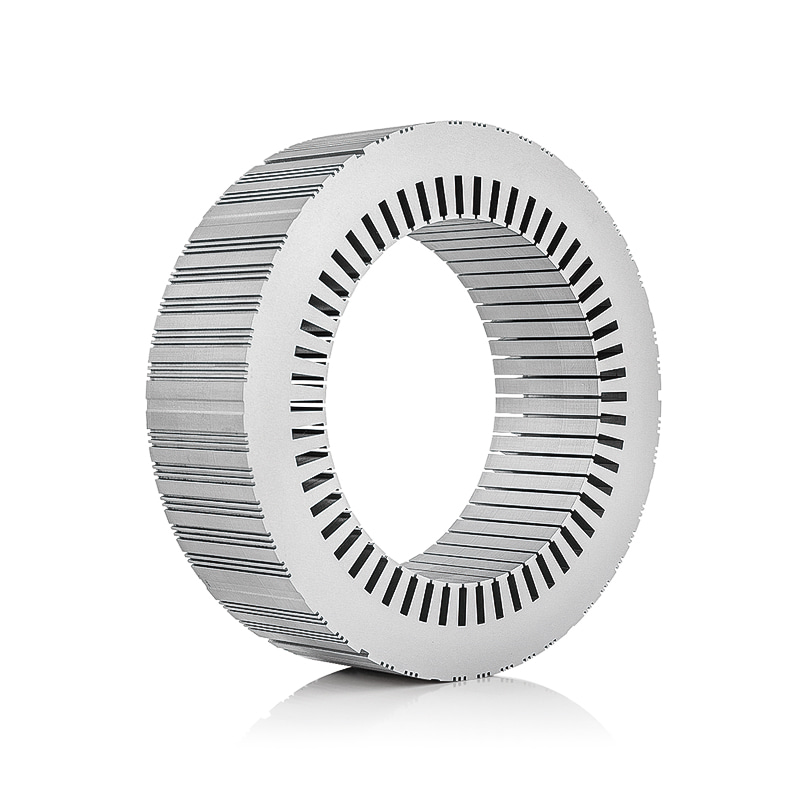
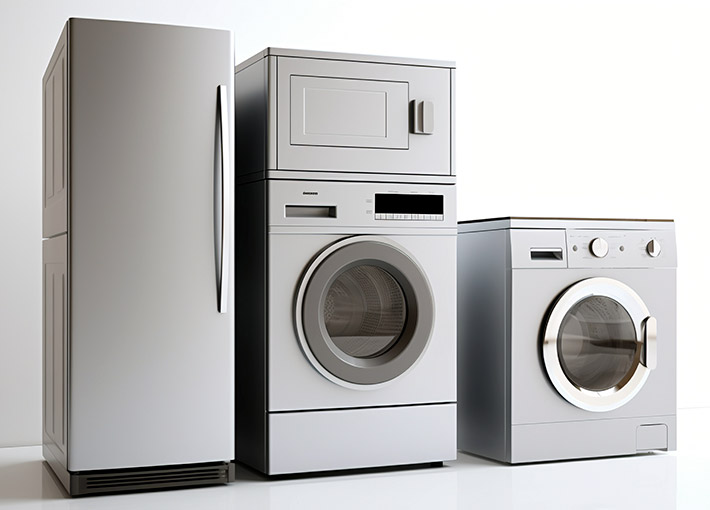 Home Appliance Motor Stator and Rotor CoreLaminated silicon steel stator and rotor cores for household appliance motors, where thinner laminations and better steel measurably cut eddy current losses, supporting efficient operation in washing machines, refrigerators, and fans.View Product →
Efficiency Classes — and What They Demand
Regulatory classes give buyers a shorthand. IEC 60034-30-1 grades line-fed motors from IE1 to IE4 with progressively lower permitted losses, and NEMA Premium plays the equivalent role in North America. Energy agencies put the gap in concrete terms: energy-efficient designs run roughly 1.5 to 8 percentage points above comparable standard motors, with the widest gaps at the small end of the range.
Success: A 30 kW motor running 4,000 hours a year, moved from IE1 to IE3, typically sheds several thousand kilowatt-hours of annual consumption — often repaying its price difference within the first year of duty.
Reaching IE3 and beyond is largely a materials and manufacturing story: better electrical steel, thinner laminations, tighter stacks and more accurate geometry — exactly where a stator and rotor core supplier earns its seat at the table.
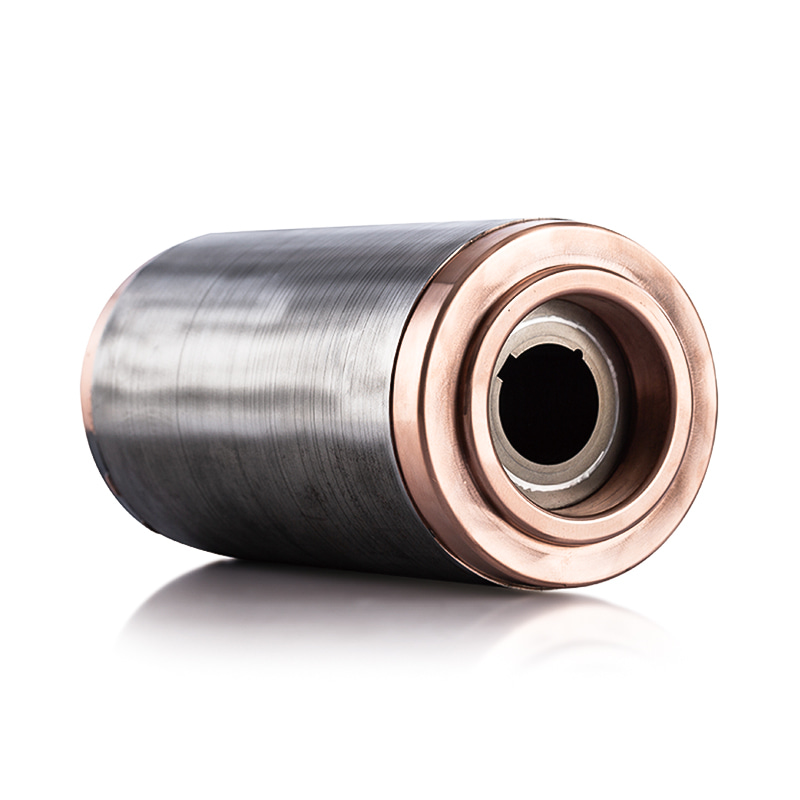
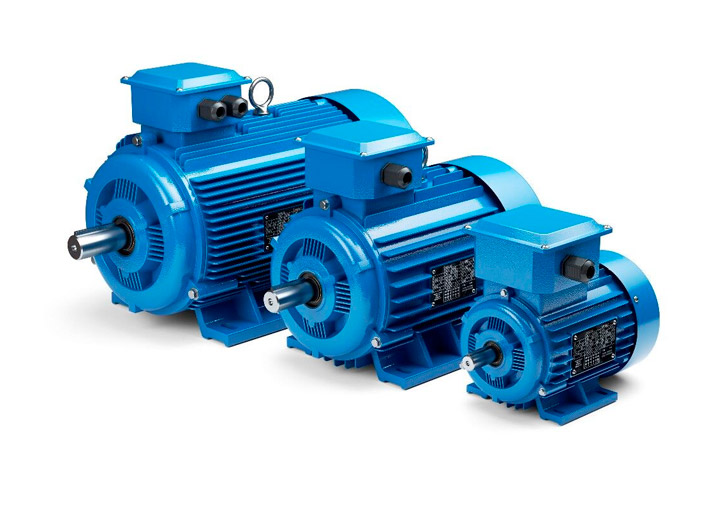 Industrial Drive Motor Stator and Rotor CoreLaminated stator and rotor cores for industrial drive motors, available in defined copper rotor sizes. Better steel, tighter stacks, and accurate geometry are key levers for reaching IE3 efficiency levels and reducing iron losses.View Product →
The Core: Where Efficiency Is Quietly Won or Lost
For anyone specifying or purchasing cores, four levers dominate the iron-loss side of the ledger:
- Lamination thickness: moving from 0.50 mm toward 0.35 mm or 0.20 mm stock suppresses eddy currents, which matters most in high-speed, high-frequency machines.
- Electrical steel grade: higher silicon and premium grades lower hysteresis loss, at a premium that running hours must justify.
- Stack integrity: controlled burrs, sound interlocking or welding and correct stacking pressure keep laminations electrically separated; one degraded layer creates an eddy loop that heats the whole stack.
- Geometric accuracy: slot geometry, skew and air-gap consistency govern stray losses and magnetizing current, and they show up directly on the test bench.
High-performance applications make the stakes obvious. An EV drive motor lives at high electrical frequency, where eddy and hysteresis losses multiply fast, so traction programs treat thin-gauge, low-loss laminations and tight stack tolerances as baseline requirements rather than upgrades.
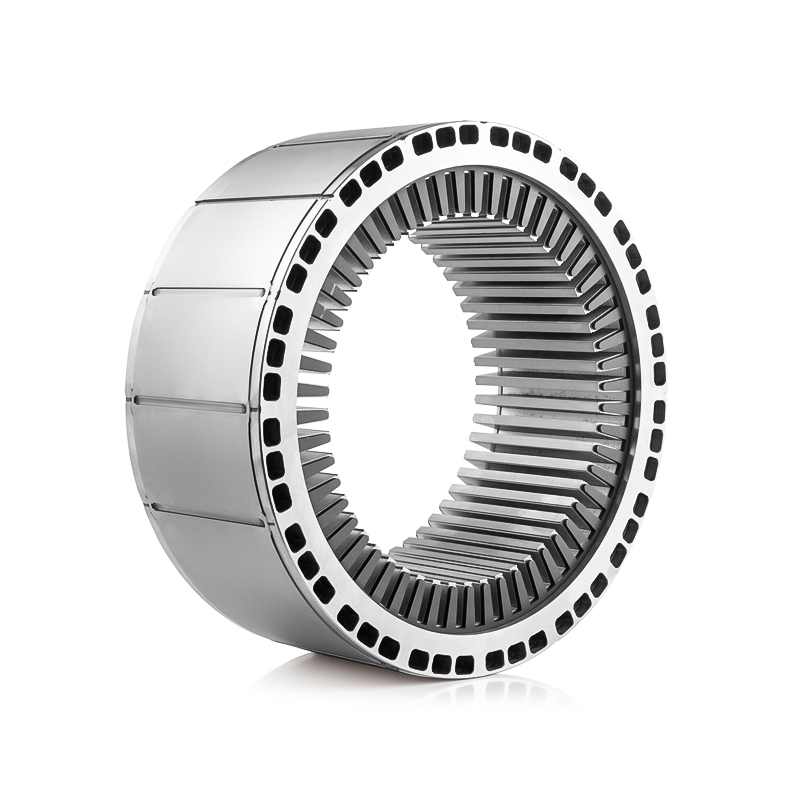
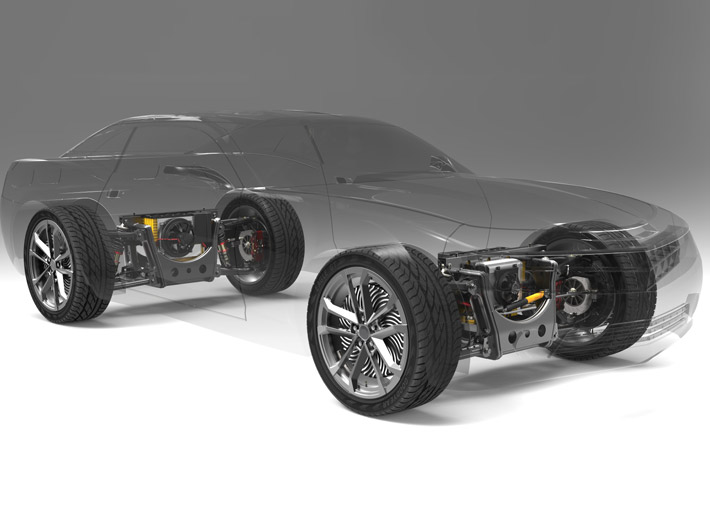 EV Drive Motor Stator and Rotor CoreStator and rotor cores built for electric vehicle drive motors operating at high electrical frequency, where thin-gauge, low-loss laminations and tight stack tolerances are baseline requirements for controlling eddy and hysteresis losses.View Product →
For a wider view of how these cores are selected in automotive programs, our comprehensive guide to automotive motor stator and rotor cores covers materials, design and sourcing in detail.
Practical Takeaways for Buyers and Engineers
- Match the rating to the load: aim for continuous operation at 75 to 100 percent of rated output, verified against the real duty cycle rather than the peak-torque case.
- Buy by class: treat IE3 or NEMA Premium as the default baseline for new industrial installations, and let life-cycle costing argue any exceptions.
- Ask how the number was measured: efficiency claims only compare fairly when the test standard and load point match.
- Model energy, not purchase price: beyond roughly 2,000 running hours a year, electricity usually decides total cost of ownership.
- Specify the core as an efficiency component: lamination thickness, steel grade and stack quality belong in the drawing, not only on the cost sheet.
Caution: Rewinding a burned-out motor can cost another efficiency point or more and shorten thermal life. For machines of several kilowatts and up with high running hours, replacement with a premium-efficiency unit is usually the sounder economic decision.
The Bottom Line
So what is the typical efficiency of an electric motor? Around 90 percent for the medium and large industrial machines most people have in mind, closer to 97 for the best large permanent-magnet designs, and substantially lower for the small motors that outnumber them all. The nameplate is a rated-point promise; the electricity bill is written across the entire duty cycle, in copper, iron, mechanical and stray losses.
Discipline in specification is where those losses are won back: right-size the machine to its load, buy by efficiency class, and hold the stator and rotor cores to a standard that keeps iron losses honest for the life of the motor. If you are weighing these trade-offs on a live project, you are welcome to contact our engineering team to talk through your application.
Previous article
No more
next article
What Is a DC Motor Core? Laminations, Cored vs Coreless Motors, and Real Uses
Related News
-
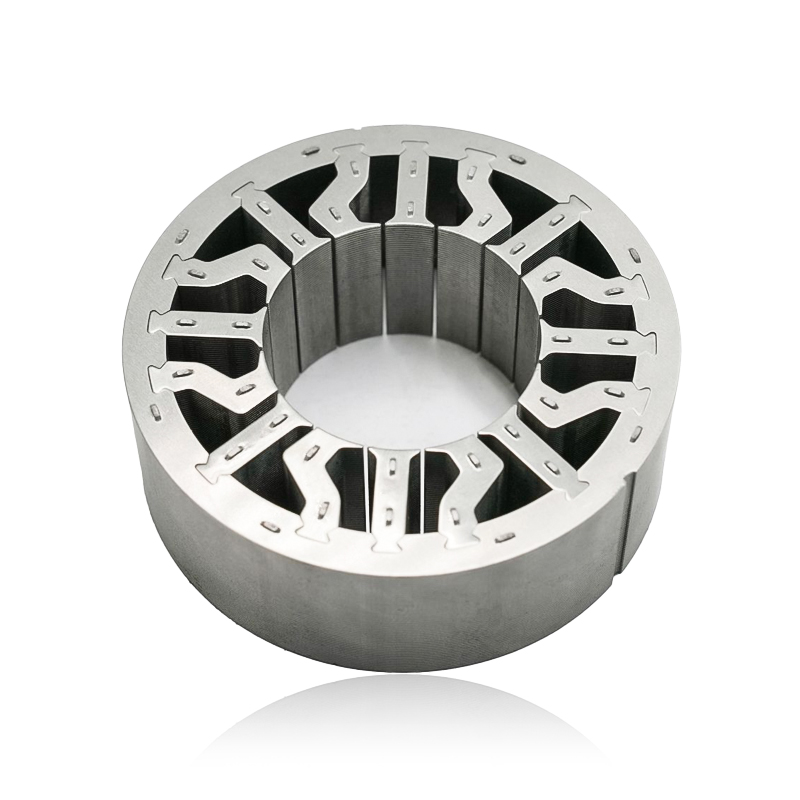
What are Stator and Rotor Cores? Stator Cores A stator core is the stationary component of an electric motor. It's the part that houses the copper windings, which, when an electric current passes thro...
See Details -
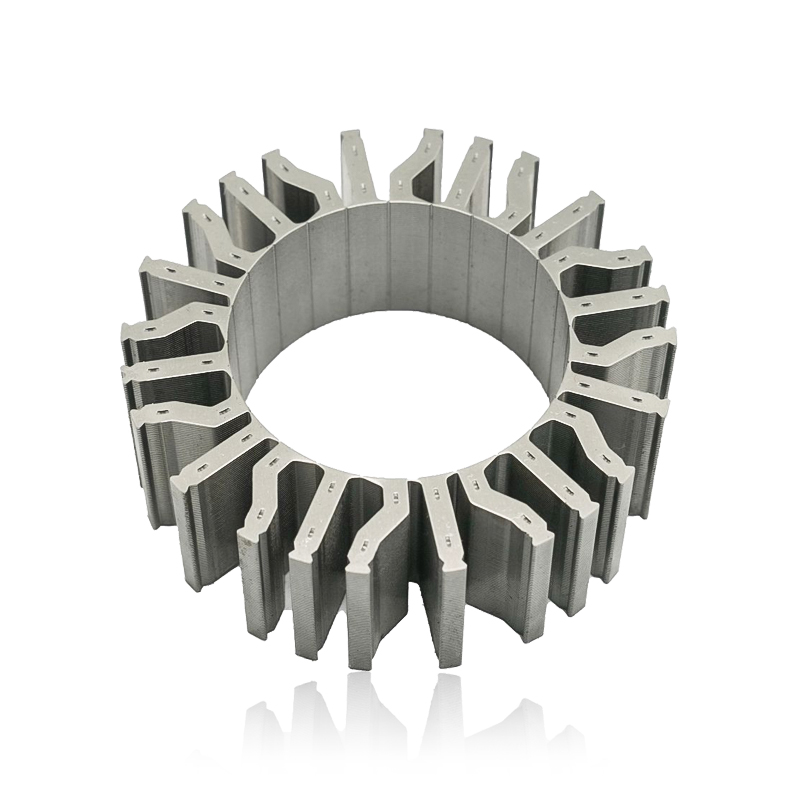
Introduction The modern automobile is a complex machine, and its evolution has been driven by continuous innovation in every component. While internal combustion engines have dominated the industry fo...
See Details -
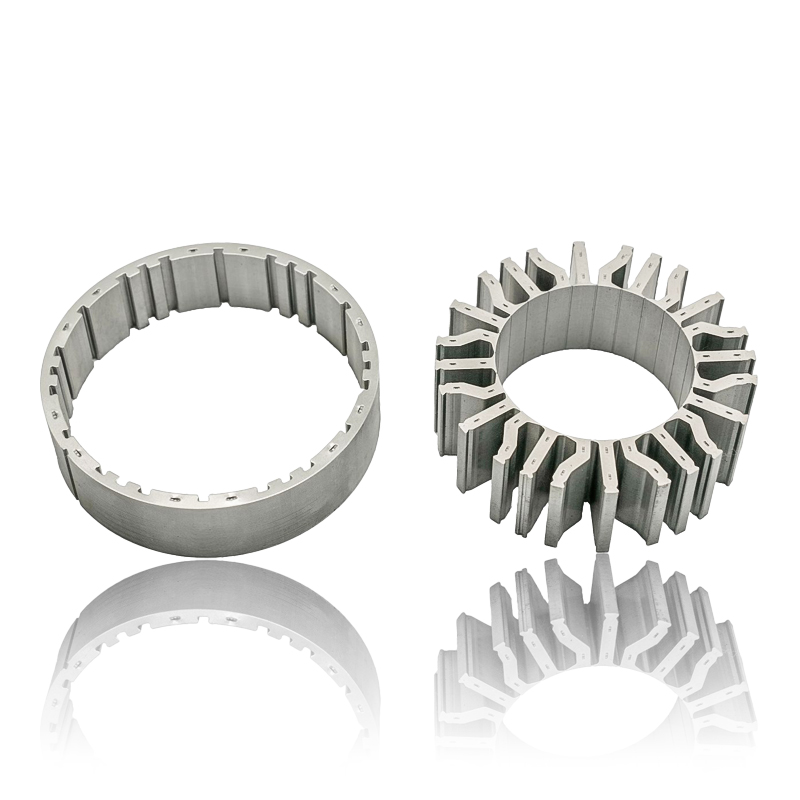
The Importance of Material Selection for Rotor and Stator Cores in Electric Vehicle Motors In the design of electric vehicle (EV) motors, material selection is a pivotal factor influencing the motor’s...
See Details -
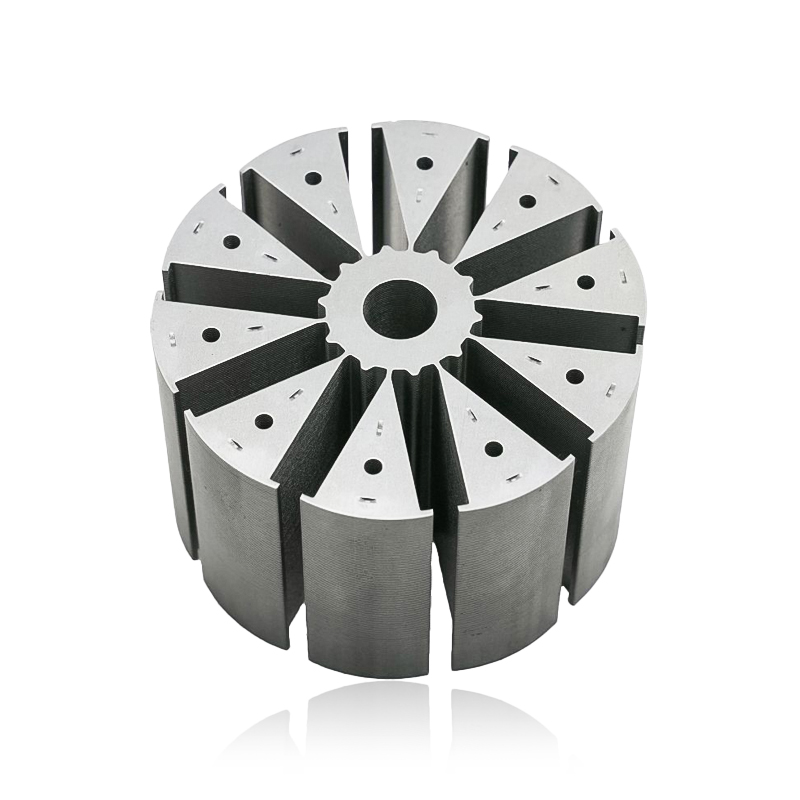
Introduction of automotive motor stator and rotor cores The increasing popularity of electric vehicles and hybrid electric vehicles has brought about significant advancements in automotive technology....
See Details


Zhejiang Jufeng Technology Co., Ltd. © All rights reserved
